Article
This episode explores Health and Well-being, highlighting how accessible systems, inclusive healthcare, and appropriate supports can improve outcomes for people with disability.
Sam Drummond speaks with Dr Dinesh Palipana, reflects on overcoming scepticism within the medical profession and the value of employing disabled professionals in healthcare. He discusses how inclusion can lead to practical benefits such as reduced absenteeism and stronger patient trust, while also drawing attention to ongoing physical and logistical barriers in the health system, including inaccessible hospital environments and transport challenges.
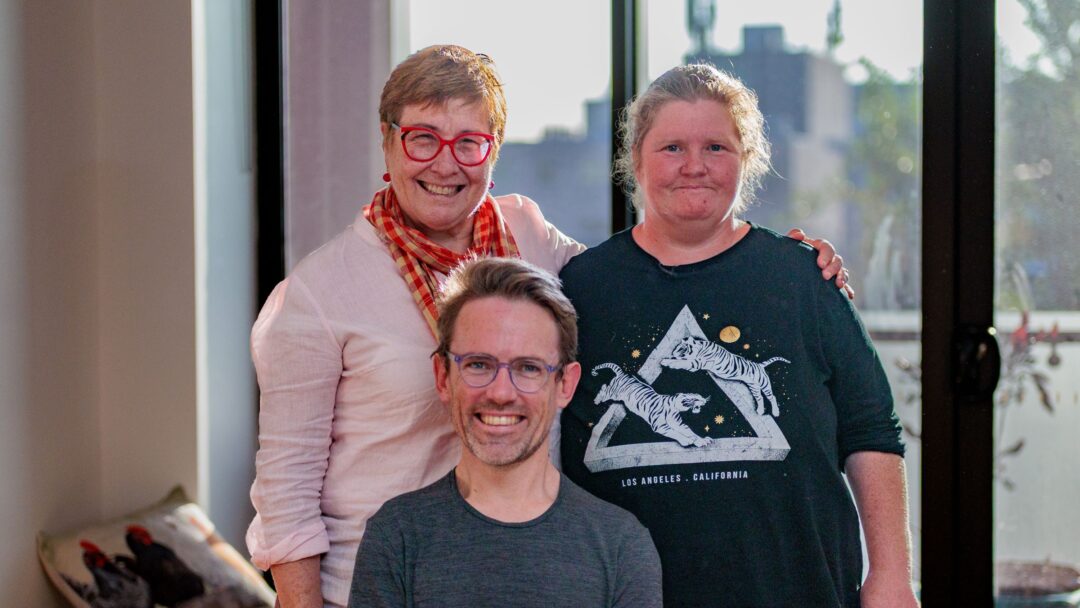
He also speaks with Dr Margaret Spencer and her goddaughter Amanda White, who share insights into the lived experience of parenting with disability. They discuss the importance of tailored supports for families, the barriers parents can face, and the strengths and possibilities of co-parenting models when the right structures are in place.
Also joining the conversation is Vera Ciavarella, who is the Disability Liaison Officer from the Royal Women’s Hospital, who outlines initiatives aimed at improving disability awareness and patient care.
Listen now wherever you get your podcasts:
Building Inclusion: Health & Wellbeing
Sam Drummond 00:01
This episode of building inclusion was recorded on the lands of Aboriginal and Torres, Strait Islander peoples across Australia. I acknowledge the traditional custodians of the lands on which this podcast is recorded and listened to, and I pay my respects to elders past and present. I'm Sam Drummond, lawyer, writer and disability advocate, and you're listening to building inclusion, a podcast about Australia's Disability Strategy presented by powerd media. Each episode, we explore one of the strategy's priority areas. Today, we're focusing on health and wellbeing. Health is about quality of life. Yet in Australia, people with disability continue to face significant barriers to equitable health care. In this episode, we'll explore what inclusive health and wellbeing looks like, and the powerful impact of having doctors and health professionals with disability using their deep medical expertise as well as drawing from their own personal experiences to shape the care of patients with disability. I've come to the Gold Coast to speak with Dinesh Palipana, an emergency doctor, lawyer and disability advocate and the first quadriplegic medical intern in Queensland's history. After sustaining a spinal cord injury in a car accident, he returned to complete his medical training and now works in emergency medicine while advancing Spinal Cord Injury Research. Dinesh brought a warmth and focus to the conversation that I've rarely encountered with a medical professional. It's a perspective that can really only come from someone who has lived the health system from both sides. Dinesh, there was a time I believe, where you were the only medical graduate in the state who hadn't found employment or had an employment offer in the health industry, about 10 years ago, you've thrived since then. What do you think the health industry and hospitals were afraid of?
Dinesh 01:59
It's funny, you know, I think the best way to illustrate this question is something one of my supervisors said when I was in medical school, or when I was just about to come back to medical school. And he said, I don't think the patients would take you seriously. And this stayed with me. I wondered for a long time, will the patients take me seriously? Will they trust me? There are some data that shows that trust in the healthcare system has been on the decline for a while. So on the back of that, I was like, will they actually trust me? Will they How will the patients see me? But here we are chatting 10 years, nearly after I became a doctor, and the patients have been amazing. I haven't ever had one patient say, can you do your job? Are you a doctor? I don't trust you with my care. So it got me thinking, right? It was actually the attitudes of the system and the people within it, not the attitude of the community. And I think there's a disconnect between how far our community has come and where the system is. I think there's also, especially when it comes to disability, there are these misconceptions about risk and absenteeism and safety. I put it to whoever asked that question, well, I'm very aware of my limitations. I'm very aware of what I should and shouldn't do, whereas a doctor who may not have the same injury that I do might try a procedure that they're not comfortable with. So I think the we need to flip these ideas about risk, and actually the data shows, if you have a workforce with disability, there's less risk, there's less absenteeism, there's more retention, all these benefits better innovation. And I think all of these things have hopefully come through in the last 10 years.
Sam Drummond 04:04
And then for patient attitudes, it could work in the inverse, where a patient sees you and sees that as a person who can empathise with what I'm going through. Do you find that that people gravitate towards you because they say, Well, I'm going to go to Dr Dinesh, because he understands this a bit more.
Dinesh 04:29
There have actually been journal articles published in peer reviewed journals about this very point, and there some of these studies say that patients want a doctor who gets it. One of my best moments in medicine was when I was on a night shift and about 2am this patient comes in with a significant disability, just like me, but they were quite ill, very ill, and I was to be there. Doctor, and I rolled to their bedside, and they said, I'm so glad that you're my doctor tonight, because I know that you'd understand. So I've had moments like that. I remember what it's like to be a patient. I know what it's like to have a disability. I know all the different things that go with it, so hopefully that flows on to the patients. There was a study done in the US not too long ago, which said about 81% of medical students said that they are not confident managing the needs of people with disability. We have one in six people with disability globally, they're more dependent on the healthcare system, the healthcare outcomes are worse, so we need more people within the system that that can inform medicine and the healthcare system about the disability experience through their lived experience.
Sam Drummond 05:55
So what are the bigger, biggest barriers that you see for patients with disability coming in to the hospital system,
Dinesh 06:03
I think there are physical barriers, so you may have an inaccessible hospital, right? Some hospitals are so old, so even their doorways or ramps or stairs or whatever might not be accessible. And we have these conversations all the time. The built environment, the logistics of getting to an appointment. What about a carer? What about transport? What if you have to do a bowel routine before you leave the house and that goes wrong? What if no one turns up to take you to your appointment or to the hospital? What if you live far away? You know, there are rural Australians with disability, I've heard some terrible stories. I was out in longreach a couple of weeks ago, and for some of those guys to get into the city to get care. You know, even on the plane, I met a guy who has to come in weekly to get a dressing change. So So I think there are all these logistical challenges, there are physical challenges, but I think the biggest thing is attitudes.
Sam Drummond 07:05
What about the different ranges of disabilities there? I think sometimes we try a one size fits all approach to accessibility, but then there might be people who are deaf or hard of hearing or have communication barriers. What? How do we best assist, assist people with those disabilities and make sure that they're getting the best care in the hospital system?
Dinesh 07:33
I love that idea that there's nothing about us without us. I have no idea what, what a day in the life of someone who's blind is, I have no idea what a day in the life of someone who's deaf is you, you and I probably don't have any idea, while we can appreciate it right about our life experiences through the day. So I think the best way to make really impactful changes is is to get those voices in ask, how do we make this hospital better? How do we make your care better? How do we make appointments better? What do you need? But I think if you just take the moment to ask, Hey, what actually works for you, rather than making assumptions, because I think making assumptions is dangerous, so ask, involve people, and create conversations. And I think through that, we can make really collaborative, useful solutions.
Sam Drummond 08:34
You're a doctor, but you're also a scientist and a lawyer and an advocate. And I don't want to get into how you find time to do it all, but what drives you?
Dinesh 08:48
I love medicine like because, you know, when I was younger, I think I was a really selfish person. I was looking inwards. I was self centered. I was always looking at what I can take. But as I've grown up, I realised that, you know, life is about giving something back to people, and leaving this world a better place and trying to do some good for your fellow human. So medicine has been a really special thing for me, because I feel like I can hopefully leave someone's world better every day. So the why has been one of those things. It feels purposeful and I feel energised.
Sam Drummond 09:33
I want to get an idea of where you see yourself in, say, 10 years time, but also the medical system in general. What's your vision for the health system in Australia in 10 years?
Dinesh 09:48
Billions of dollars that we invest in healthcare is supposed to serve a human being, but if that human being is not having the best experience, if that human being is not getting the surgery that they want, or the. Care that they need, or the best outcomes, then we, one of the wealthiest countries on Earth, are doing something wrong. So when it and when it comes to people with disability, I think we need to collaborate with the people who have lived experience across the spectrum of disability, but also across the spectrum of geography, because the needs of someone living in a metropolitan centre is different to someone living in a rural region, and Australia is so unique in that it's vast. And we just need to ask, Hey, what do we need to do to make this better for you, and I think if we do that, we'll work towards something beautiful.
Sam Drummond 10:46
Tell me about preventative health with people with disability.
Dinesh 10:49
Yeah, I think in a lot of the conversations that we get into, we talk about hospitals and access to hospitals, but the primary care component is really important, because we want to prevent people from getting ill. We want them anywhere to manage their health, not have that heart attack, not have that stroke, not have that complication. And primary care is the most important part, but people have trouble accessing primary care as well. So good telehealth, good access to GPS, good access to preventative allied health, whatever they might need, is really important, but I got to say, education and employment is linked to good health as well. Education and Employment allows us to reason better with information. It allows us the economic power to access private health insurance or whatever else you might need. So I think there is a saying, Good work equals good health. All these things are intertwined. So if we're really to solve this riddle or this challenge of getting better outcomes for people with disability, we have to look at all of it, education, employment, health care, all of it.
Sam Drummond 12:11
Dr Dinesh, thanks for coming on the podcast.
Dinesh 12:13
Thanks so much.
Sam Drummond 12:14
I've traveled to Sydney to meet Dr Margaret Spencer and her god daughter, Amanda White in Margaret's neat, homely, Waterloo apartment. Margaret and Amanda are two of the warmest and most gracious people you could hope to Hi. I'm Sam. We made it Margaret is a distinguished lecturer and director in field education in the Social Work program at the University of Sydney, holding qualifications in nursing, theology and social work over more than 30 years, her research and practice have championed the rights and well being of parents with intellectual disability.
Margaret 12:52
Welcome to my place.
Sam Drummond 12:53
It's lovely.
Margaret 12:54
Thank you.
Sam Drummond 12:55
I want to talk a bit about your advocacy for parents with disability. How did you get into that?
Margaret 13:03
Really, actually, people just don't think about people with disabilities as being mothers and fathers. They you know, it's only you know, even still, even even, like in this day and age, like, you know, I often will have to say, I'll be talking about, oh yes. You know, my area is I support parents with with disabilities. And they go, oh yeah, parents with disabilities, they need a lot of support because, you know, having a child with a disability and I say, no, no, no, I'm not talking about the children with disability. I'm talking about, Oh, you mean parents with disabilities, as if that is something that is, sort of people just don't get their head around, yeah, and, and I find that sort of quite amazing that we are where we're at, you know, 2025 and we're still having to to, you know, sort of clarify that.
Sam Drummond 14:03
Margaret has spent 40 years advocating for parents with disability, and in that time, she's observed that the greatest barriers they face are not within the home, but out in society and across the health sector.
Margaret 14:15
The kids, the kids don't see their parents disability. They see them as Mum and Dad, it's only then, when they enter the schooling system or the outside world, where suddenly they hear this word disability, or they hear that, see that that sort of this word disability attached to their parents sort of creates a sort of a difference for them as a family, that it becomes an issue, whereas for kids, they don't see their parent as a parent with disabilities. That's a term we use as far as the kids go, they're Mum and Dad.
Sam Drummond 14:52
What can you tell us about reproductive justice and what does that look like for you?
Margaret 14:58
Well, I suppose when I talk about. Reproductive justice. I I understand it in terms of the UN Convention in article 23 around that everybody it's a basic human right, that we have a right to enter into intimate relationships. We have a right to have sexual relationships. We have a right to make decisions about our bodies as sexual beings, we have a right to make decisions about if we are if we're going to have children, if we're not going to have children. For me, the really significant part of article 23 for me, is that it also says that states have a responsibility to provide appropriate support to to families where a parent has a disability. So that idea that of appropriate support, now I don't think that, I don't think that we've really teased that out. I don't think we've really teased out what appropriate support means. I think that it would be very interesting if you were to sort of talk to lawmakers, if you were to talk to child protection workers, if you were to talk to parents themselves about what is appropriate support, and if you just look at the general population and everybody who's parenting, everyone's appropriate support, it looks very different, you know, depending on your circumstances. But I think, you know, I think for me, reproductive justice means being able to have access to appropriate support on your terms and not on what you know sort of is decided for you.
Sam Drummond 16:52
Through your work, you're helping shape the next generation of social workers. how are you making that shape is accessible for people with disabilities to become parents if they choose?
Margaret 17:07
I feel I'm in this really fortunate position at the moment, because I am teaching. I'm teaching as well as all the other things I do. I'm an educator of social workers, so I've been able to share my own story, and I've also been able to share these ideas with with young people coming out, particularly those going into the child protection system. I also have the opportunity being in a university system of being able to talk to other disciplines. So I have the fortune of being able to talk to nursing students, who are a really important group, because they're often meeting parents, or meeting, yes, meeting parents at that sort of antenatal stage. So you know, their attitudes are really important and how they think about it. I've also had the opportunity to talk with law students in disability in the law courses about thinking about this in terms of even just how you would approach this, in terms of, from a sort of a legal perspective, we use this term parenting capacity. And parenting capacity has a particular sort of, I suppose it's sort of a particular legal concept in a way. But you know, we talk about, you know, does this person have parenting capacity? Now, capacity is really dependent on your access to resources, the actual what you have to do, and what adjustments are made. And in other areas of like, where we talk about capacity, capacity is also, it's also sort of task specific. I'd like people to move away from thinking about parenting capacity, because I think that's very ableist. What I would like to see is that we actually start to go, what does this person need in terms of support to parent this child? Even better, I'd like to say, what does this child need to stay with their family and to be parented? And then that way, we're actually looking at not just putting it on to the parent themselves, but we're putting it on to everybody around them. So it's just, I think what we've got to do is change people's thinking. I think, I think it's a real I think the first place we have to that we we really need to tackle is people's awareness and ableism. You know, we have now in the area of parenting with intellectual disabilities. We have over 80 years of solid research, and all the research says that it's not disability that impacts on. It's the disablement, the social disablement. It's not the disability as such, but it's the not being able to get support. It's the it's the treatment of people with disabilities.
Sam Drummond 20:13
Margaret is both the godmother and essential support for Amanda White, a parent with an intellectual disability, she has offered stability, care and practical assistance throughout Amanda's parenting journey. During Amanda's childhood, Margaret also provided respite to Amanda and her siblings, whose own parents have intellectual disabilities, helping to support the family from an early age.
Margaret 20:37
I remember the first moment that I met Amanda. I can, I can bring that, that picture up. I ended up being their respite carer, and and, and so Amanda. Every Friday, I picked the girls up after school. They'd stay until Sunday. Every holidays, they'd come so until, basically, yeah, the kids aged out of care. That was sort of the arrangement. There was one period in their late adolescence where they did go and live with a couple who were fantastic and and so Amanda aged out of care from their care.
Sam Drummond 21:19
When Amanda was 21 she found out that she was pregnant and with twins.
Margaret 21:24
Amanda being the eldest sister of her other sisters, she had a natural maternal instinct to herself and her way of being with the babies. You could see that she really wanted to be a mum, and so, yeah, I had to put my money where my mouth is, and basically say to Amanda, if you want my support, I'm there for you. She chose that. She didn't have to choose that. And then we worked together basically, and have worked together I suppose co parenting the twins, they're now, as I said, they're now the same age that Amanda was when they had her, and they're absolutely beautiful girls, beautiful girls. They love their mum. They understand her disability, they understand her childhood trauma. And I think, yeah, they're not. There's nothing bitter or twisted about them. They're they're just really great kids, and they've never been in the care system. And they're the now the first of they're the first of four generations who haven't come into the care system. Amanda has been incredible at being able to reach out and use her circle of support. She used it very well. So she was actually able to say, this is what I need, and I'm actually going to keep you involved in my lives, because I need that for myself and my girls. And I think it worked because of that. And I think Amanda just had this sort of way, particularly when the kids were little. Is how is this going to impact on my girls? What will this mean to the girls and and that became sort of the that became the baseline in which decisions were made. And so, so I think she was really good at doing that.
Sam Drummond 23:35
And can we replicate that in a broader context for for people with disability, of all types, who want to become a parent, but particularly with people with intellectual disabilities,
Margaret 23:48
I think that there's people. I think there's I don't think that we're alone. I don't think that we're unique. I don't think that my situation is it's unique. Every everybody's situation is unique, but I meet people who who are doing what I do. I meet people without disabilities who have that relationship with their the grandparents in their lives. I meet people who are holding down big jobs and their parents are very active in their kids lives, you know, so I think people do it. I think I think we could replicate it in terms of, I think if you could actually look at co parenting models, I think they could work. I think what it takes from, say, the person who is the CO parent like myself, I think you need to have very good skills at being able to test your own assumptions, and also be very careful not to to to bring in to check your own ableism.
Sam Drummond 24:53
When Amanda had the twins, she was under the supervision of child protection services due to concerns they had about her ability to parent
Amanda White 25:02
So, I basically had to really choose what I wanted. And, you know, break the cycle. I didn't want to be having my kids in care, and like Margaret said, I'm the first one in the family to break the cycle, and I'm happy that I did break it, because I wouldn't have been able to be a parent if they were taken off me.
Sam Drummond 25:36
What do you think you're really good at as being a parent and a mum
Amanda White 25:42
routines like bathing time, milestones, listening to what the kids actually wanted at the time they wanted and always concentrating on the girls and making them priority over anything.
Sam Drummond 26:13
What? What times do you remember as from the early days, when they were toddlers and before school? What were the really happy moments?
Amanda White 26:24
Just spending a lot of time getting them dressed or getting them ready and just having quality time with them.
Sam Drummond 26:40
What kind of supports helped you be the best mum you could
Amanda White 26:48
Co parenting with Margaret. Whenever I needed anything, I could call her, and if there was anything I was concerned about, I would call her straight away.
Sam Drummond 27:03
Do you think attitudes have changed over the time of your parenting journey?
Amanda White 27:10
I think so, because they realised that I can be a parent and that I can look after my girls. And you know, there was ups and downs, but isn't that what it is in every family?
Sam Drummond 27:28
Amanda received support from tresilian, an organisation that assists parents and carers of babies and young children by providing education, guidance and practical help with the challenges of early parenting.
Amanda White 27:40
So there's two times they all went one was feeding and the other one was sleeping, knowing what they had to do. And they were great help, because I was able to do that when I went home.
Sam Drummond 27:58
What would you say to people with disability who are dreaming of becoming a parent but think that society doesn't want them to be.
Amanda White 28:09
Make sure that you have your circle of support and always reach out to your supports when you need help, don't ever not reach out. Just make sure that you reach out and get the help you need.
Sam Drummond 28:33
In Melbourne, I visited the Royal Women's Hospital. It's such an important place for so many people in the state. For me, it's where I was born and where my daughter was born. Walking in, there's an immediate sense of calm, a rare feeling in most hospitals. However, creating an environment that is equally welcoming and accessible for people with disability can be more complex.
Vera 28:56
Patients can refer themselves to me if they're feeling like how they've been being cared for in hospital hasn't really felt supportive. Staff can refer me patients. It really is, you know, my kind of goal for the hospital and a part of my role, because my role is not also just supporting patients, but also helping with disability awareness as an organisation, we have our a lot of it, of us trying to become disability aware is linked with our Disability Action Plan. So we're looking at things like, you know, breaking down barriers, making people feel more supported, and we focus on very patient centered care.
Sam Drummond 29:39
That is Vera Ciavarella, the Disability Liaison Officer at the Royal Women's Hospital. She is a dedicated staff member who works closely with patients with disability, ensuring they are never treated as an afterthought.
Vera 29:51
So here, we're also quite lucky that across the precinct, we have a way that patients can let us know and self identify as having. Disability, so which means they can be letting us know what their accommodations are, so what supports they need. And also what we're doing is we're kind of a hidden disability sunflower wear organisation, so we've got about nearly 500 staff that are trained in it.
Sam Drummond 30:18
The Sunflower lanyard is a symbol worn by people with invisible disabilities to indicate they may need additional support. It helps staff recognise these needs, enabling more inclusive, accessible and empathetic interactions
Vera 30:32
that then links with my role too, because it might be about disability awareness, Disability Education.
Sam Drummond 30:37
Another key focus at the Royal Women's Hospital is the women with individual needs clinic or win a specialist antenatal service for pregnant women with disabilities. How do you think it's different being a women's space?
Vera 30:52
Well, I think we acknowledge that, you know, it's it can be challenging. You know, becoming a parent for anyone, let alone, you know, having disabilities, that complexity around, you know, that ableist kind of society. So because we have a specialist service here that can be providing that that care for patients that identify as having a disability, so it's a multi disciplinary team that can be providing that continuity of care, and like I said, I can work alongside them as well. So I feel like here at the Women's, we really are trying to embed it across all areas of hospital as best as we can,
Sam Drummond 31:39
while pregnancy and birth are central to the hospital's work, the Disability Liaison coordinator supports women across every stage of their health journey.
Vera 31:48
So for example, I had a patient that was coming in for a procedure they're autistic, easily got overwhelmed. So I put together a social script, working with the imaging center of what the patient can expect, what they can feel, and I was there with her when she had a procedure, and was able to know what she needed when she was getting overwhelmed, which helped her to have a better experience.
Sam Drummond 32:15
Sometimes we look at people with disability, and there are the people who identify as having disabilities and the people who don't know it yet. Yes, how are you making sure you reach the people who don't know it yet?
Vera 32:28
Well, that's the thing. With our disability identifier, people can identify so they can you know what we're especially what we're doing with all this work of hidden sunflower that you don't necessarily need to have a diagnosis, or that you know it's breaking down those barriers, that not all disability is physical. So here, from an organisation point of view, it's if you feel comfortable identifying as having a disability as well. Because, like you said, not everyone does identify as having a disability. So I may ask questions of what are maybe some potential accommodations that you need or supports to make sure your care is a way that you can understand
Sam Drummond 33:17
A key focus of Vera's role as Disability Liaison Officer is ensuring staff understand the diverse experiences of people with disability.
Vera 33:25
So that was something that I thought as well. I kind of questioned, do people actually in our community understand what a disability is? So we put together that a little bit of an education piece that we can be sharing with our community to understand that not all disabilities are visible. You can be letting us know, so we can, then, when you're here, make sure your care is feeling equitable, supported, and we can be patient centered.
Sam Drummond 33:53
What's what sort of adjustments are available for people when they come in.
Vera 33:58
So again, that's what we try to make it very patient dependent. It might be like You're here now it's, I need a space that's not so overwhelming. I need a quiet area so we may negotiate that. They may wait here. We've got lots of other teams that have just gone on their own back, that have organised, you know, fidget things and coloring books and things just to make people feel comfortable, you know, like I've said, writing some social scripts so people feel comfortable and not so overwhelmed before they come in for their procedure, making sure information is written. You know, trying to advocate for extra time so that it, you know, physical disabilities. Do we have the right equipment? Do people feel comfortable? So again, it's, you know, Auslan interpreters. There's a whole range of things that we can offer, but it's obviously dependent upon the patient and working together with them as best as we can.
Sam Drummond 35:00
Hmm, is there a particular person's story that stands out for you? For you?
Vera 35:06
Yeah, I think so. I think the patient was in here and completed the disability identifier with one of my colleagues. They have they're neurodivergent, they have a history of trauma, and I heard some feedback that they were coming in for a physiotherapy appointment. The physio looked at the information, knew to turn down the lights, knew to just ask the questions in a clear, slow way. The patient then left the experience feeling the best she's ever felt, the most calm, the most supported. She then came back here and told my, my colleague, how, what the best experience that she had.
Sam Drummond 35:49
What do you think a disability, confident hospital looks like?
Vera 35:54
Well, I for me, like my my goal, linking with my role, is that any person that comes into this hospital that has a disability, any staff member, is going to feel comfortable, the patient will feel safe and comfortable that we don't need to think about, do we have the right equipment? Do we know how to do this? Do we know how to do that? And just the patient doesn't have to come here and, you know, decide of, you know, my life's hard enough, as as it is already. We have the things already here for you, so which means we can tailor your care. You feel safe, you feel supported.
Sam Drummond 36:35
Vera, thanks very much for sharing some insights into your role and the experience of people with disability.
Vera 36:41
Thanks so much for having me, Sam.
Sam Drummond 36:44
You've been listening to the building inclusion episode on health and wellbeing, from spending time in Queensland with Dr Dinesh Palipana to speaking with Dr Margaret Spencer and Amanda White. This episode took us across the country to explore what people with disability need to feel supported when it comes to health and wellbeing. These conversations highlight that inclusive health care is about access, dignity and creating accessible health services where everyone is supported. This has been Building Inclusion, Australia's Disability Strategy podcast hosted by me Sam Drummond, presented by Powerd Media, produced by Eliza hull, recorded by Ascent Media. Thanks for listening.
Host – Sam Drummond
Produced by Eliza Hull for Powerd Media
Audio Edited by – Honor Marino for Print Radio Tasmania
Audio Record – Ascent Media
This podcast by Powerd Media is supported by funding from the Australian Government Department of Health, Disability and Ageing under the Inclusion and Accessibility Fund: Australia’s Disability Strategy (ADS) – Community Attitudes grant program.