Article
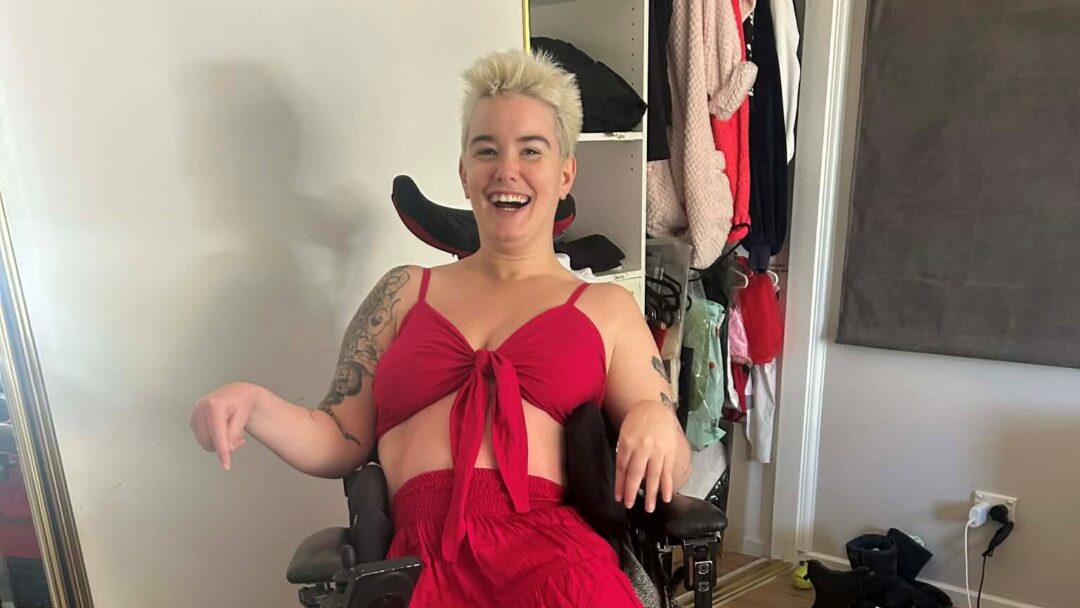
My fellow disability community, how many times have you been shamed, shut down or laughed at for expressing your sexuality and need to be treated as a sexual being? Do you ever feel like you’re asking for too much? Our healthcare system and other systems like NDIS not only lack research, resources and awareness surrounding intimacy, sex and relationships for people with disabilities. But, also refuse to be educated on such matters and as a result, we are being forced into a society where we are being mocked for having sexual desires that are apart of the human existence and coerced into violent abusive situations.
Society sadly doesn’t cater for any sort of access needs such as the lack of accessible sex toys or resources that helps us to explore pleasure safely, which not only hurts but also puts us in danger of decreasing in mental health and suffering abuse.
For example, the NDIS system doesn’t recognise it as being reasonable and necessary. People automatically assume because I’m a disabled non speaker, living with cerebral palsy that I am not a sexual being or interested in exploring my natural and physiological needs.
However, I blame our systems, not our communities because if our systems actually supported us, then it would be easier for society to follow by example.
These are a few experiences I have had navigating a world that doesn’t accommodate, educate and normalise people with disabilities as sexual, datable beings. Let me give you a glimpse into my world, you will soon see what I mean by this.
When I’m dating someone, I receive a lot of stares, misguided ableist compliments, like “how beautiful”, and “it’s so nice to see”, which implies that my dates are doing me a service by dating me. I even get looks of shock followed by whispers like, “they’re dating”, or “are they kissing?!”. Once my long term ex partner was asked if they were my father and my support worker who was with us at the time, my mother. I don’t know if any of us fully recovered from the horror and disbelief.
Sometimes, I come across people who can become a little obsessed with me, I mean who wouldn’t be, I’m a meal on wheels.
Actually, these people are generally more obsessed with my disability and how it looks to others when we are together.
In the past, I haven’t known until it’s too late because it is still a new experience for me to navigate. When this happens, I am treated like an ornament - a trophy on a book shelf to be admired. I have also been told, after breaking up with someone, that they still daydreamed about taking me to the toilet, which was something I didn’t have any prior knowledge of them fantasising about when they confess to me. Ick!
Don’t get me wrong, I love a good fetish, go off queen but saying statements such as these aren’t only weird, but also very harmful to the person with disability. I hear you, the reader, ask where were the red flags? They were there, I just chose to ignore them because to quote the song by No Doubt “I’m just a girl” and I didn’t know better at the time. Another example of my disabled body being fetishised was when someone was aroused by eating food off my chest, which had fallen from my mouth, when assisting me to eat at a restaurant in public because I couldn’t remove the food myself.
I was yet again Infantilised and violated, but this time it was by someone I trusted enough to let into my heart space and I was in unfamiliar territory. Disgusting, what happened to inside thoughts?! Why would anyone get off by the things that I can’t do, without consent?
It felt as if they were trying to overcompensate for society’s shortcomings around disability and didn’t have the appropriate tools for awareness so they inadvertently made the same mistakes as the majority of our community.
This is why we need our systems to recognise that we, people with disability are to be celebrated as the magnificent, whole, sexual, datable beings we are. Systems like NDIS need to fund things like sex toys, sex work and other disability related access tools that makes it possible for us to explore our bodies safely. Healthcare needs to include more educational services for disabled individuals and families, not silence us from asking questions. This is a worldwide problem that we need to address.
Society, if you are curious, just ask. I can almost guarantee that we don’t mind answering your questions. We don’t deserve to be mocked, locked up in the cupboard, like Grandma’s old Worm Charming trophies from her heyday, not to be seen or spoken about.
We are people, funnily enough and it’s our differences that make us vibrant. Hear us, see us, embrace us!