Article
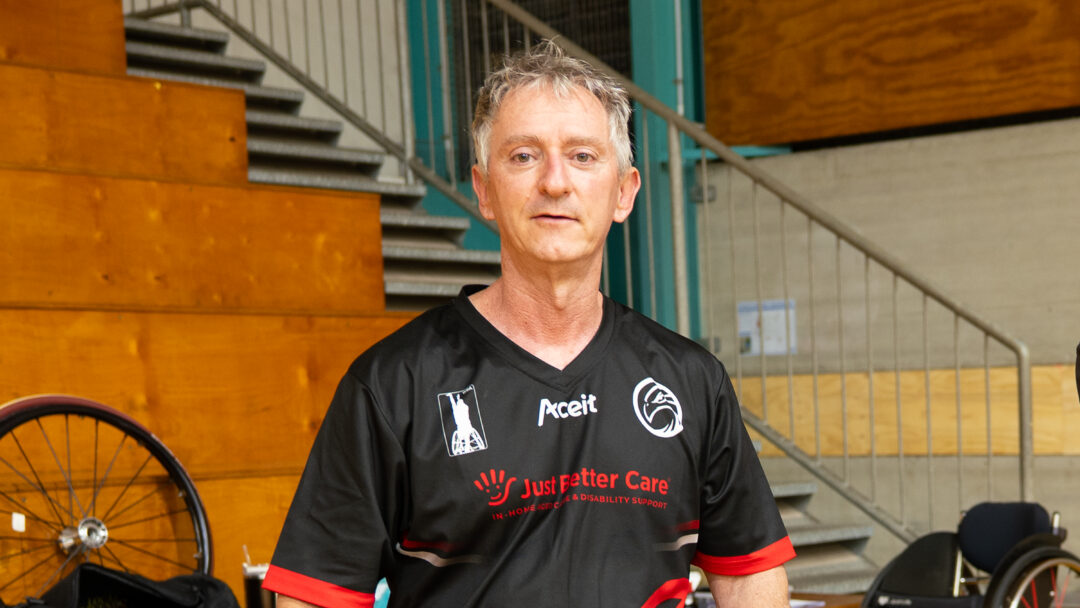
For Brian Gardner, volunteering in wheelchair basketball is about far more than sport. It is about community, connection, independence and creating opportunities for people with disability to participate and find a place where they belong.
After a high-speed car accident in 2012 left Brian with an incomplete spinal cord injury and traumatic brain injury, he developed acquired dystonia. His rehabilitation was complicated, and he initially resisted using a wheelchair.
Eventually, a psychologist helped Brian see his wheelchair differently — not as a symbol of what he had lost, but as a tool that could help him do more.
Using a wheelchair strategically meant he could conserve energy and manage cognitive fatigue while continuing to participate in the things he enjoyed
Then he discovered adaptive sport
His first experience came through a Wheelchair Sports NSW open day in Wollongong, where he tried hand cycling. The experience was emotional
I cried. It was like freedom
Brian Gardner
He eventually began wheelchair basketball, although it was challenging. Managing a wheelchair, basketball, other players and the noise of a game was initially overwhelming because of his brain injury.
During his first session, he lasted around 15 minutes
Rather than giving up, Brian and his daughter developed a strategy. She would set a five-minute timer during training, gradually building up his endurance. Those five minutes became 10, then 15, and eventually, after around a year, Brian could manage a full two-hour training session.
Today, Brian is heavily involved in the Illawarra wheelchair basketball community, supporting players from beginners through to intermediate level and helping create pathways into competition.
For him, the value of the club extends well beyond the court.
We are a very community-oriented team
Brian Gardner
Brian has seen how participation can change people's lives. He recalls one young player with cerebral palsy whose family noticed a significant difference in his enthusiasm for therapy after he began wheelchair basketball. Suddenly, he had something he looked forward to each week.
Brian also encourages families and support workers to get into a wheelchair and participate themselves, creating shared experiences and connections between disabled and non-disabled people.
His volunteering has become a huge part of his life. He helps secure equipment and funding, including basketball wheelchairs, and supports new players as they develop their skills.
It changed my life
Brian Gardner
For Brian, accessible sport is about more than competition. It can provide connection, confidence, routine and belonging
And volunteering can be transformative too giving people the opportunity to contribute, lead, teach and help create the kind of community they once needed themselves
This interview was part of 'Pitch In' the podcast - listen now wherever you get your podcasts.