News
Prefer to listen? Hear the audio version on 1RPH
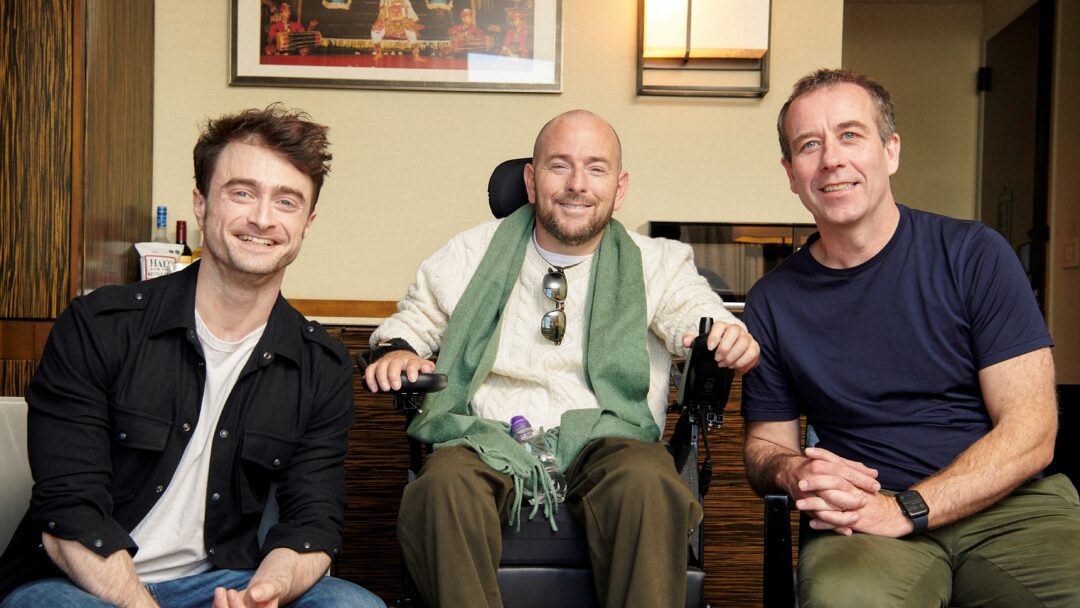
Former UK stunt performer David Holmes has led an incredible life, receiving numerous opportunities as a spirited, young athlete which paved the way for him to be chosen as the lead stunt double for actor Daniel Radcliffe on the Harry Potter film franchise. However, when his career was cut short due to an accident during rehearsal, Mr Holmes was forced to rebuild his life and sense of identity.
Now a dedicated disability advocate, he highlights the significant financial and social barriers faced by the disability community. Powerd sat down with the much respected stuntman to talk about his journey.
David describes his younger self as having a high level of energy, noting that he was smaller than other boys.
As a young man growing up, there was one incident on a canal boat trip where I ended up running across a motorway with no clothes on. That got me suspended
David Holmes
His parents channeled this energy into gymnastics, a sport that helped him build bravery and learn the techniques that would later allow him to transition into the movie industry.
David considered other career paths, such as becoming a gymnastics coach or a PE teacher, driven by a desire to teach new skills to younger generations. He was given the opportunity to work on his first film, Lost in Space, at the age of 14 due to his gymnastics coach also being a stuntman. It was during this production that David first interacted with the renowned stunt coordinator Greg Powell.
A couple of years later, Greg approached him about a new kids project for what would become his career-defining role.
I've got a phone call and he said, ‘would you like to come in for a stunt test on Harry Potter?
David Holmes
David explains how Greg was ultimately responsible for the stunt test that he describes as “the world's first Quidditch ride,” where he was strapped to a broomstick on the back of a truck to secure his position. “[It was] the best job any young man could ever ask for.”
David served as a lead stunt double on six films, but during rehearsal for Harry Potter and the Deathly Hallows – Part 1 in January 2009, he was practicing a stunt for a scene involving Harry's battle with Voldemort's snake, Nagini, which utilised a “faster take off” with a “stronger strike” from the snake than the rehearsals had conducted the day before.
To achieve this, they shortened the travel of the wire and changed the mechanics of how David was lifted off the floor. These adjustments resulted in him flying into a wall at a “ridiculous velocity.”
“I went in like a dart. I actually broke my neck through two crash mats and snapped a wooden panel behind it,” he says.
Despite the severity of the impact, Holmes remained conscious throughout the ordeal. His initial recovery fixation surgery, time in an intensive care unit and six months of rehabilitation in a spinal unit.
Now a wheelchair user with 24-hour care, David requires assistance with nearly every aspect of daily life, including eating, bathing, and getting in and out of bed.
He also faces ongoing neurological changes, such as losing function on one side of his body, which he describes as a "ticking time bomb" that causes significant anxiety.
Despite these challenges, David maintains a remarkably resilient outlook.
A documentary about his life, David Holmes: The Boy Who Lived, was released in 2023, followed by a biography of the same name.
David says that he would not change anything if he could turn back time. He believes the experience of acquiring a disability has made him a better person.
Showing vulnerability and sharing vulnerability is not weakness. It’s strength,
David Holmes
Since the accident, David has gone on to use his platform to push for a more inclusive society where individuals with disability are valued as equal contributors.
Quite often we're reminded that disabled lives aren't as valued as able bodied lives [but]…we are the world's best problem solvers because we are forced to be.
David Holmes
When questioned about his perspective in relation to the ongoing fight for equality, he suggests focusing on the process.
“Access to life, to happiness, to love and inclusion is a human right and we could all do better… we should focus on the journey, not the destination.”