News
Content warning: contains reference to abuse.
Reporting by Sam Rickard and Lizzie Eastham from Vision Australia. This is an abridged interview from Vision Australia's Studio One podcast.
Sam Rickard
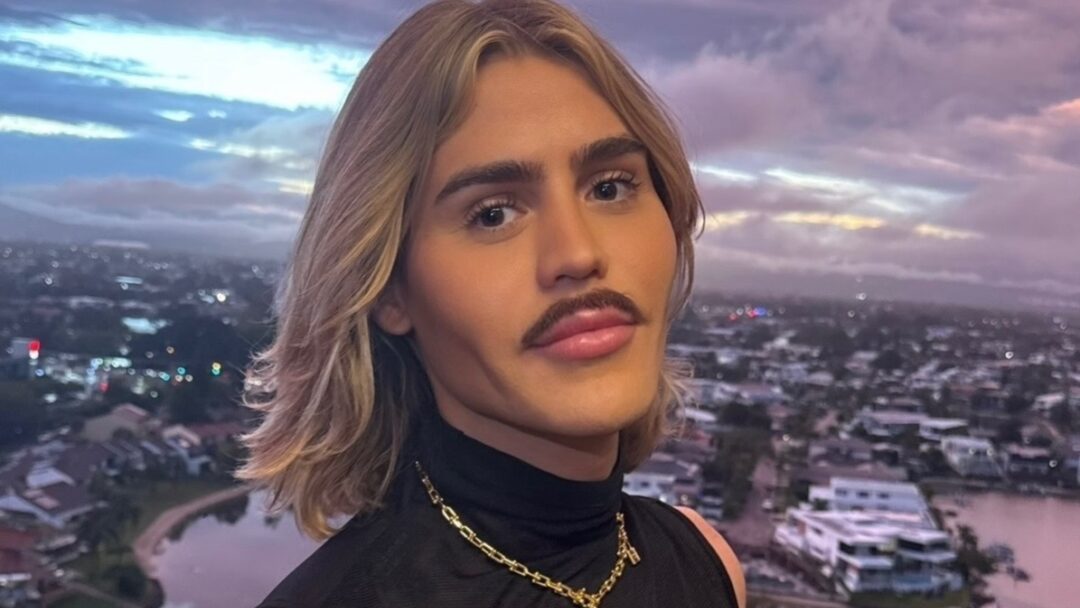
Patrick Rory John is a psychotherapist and clinical counselor. They talk to us about disability, sexuality and the importance of the correct pronoun.
Patrick Rory John
I guess psychologically speaking, gender identity and sexuality are core parts of how we understand ourselves. And I think, you know, it makes a lot of sense. We like to put things in categories. You know, male, female, black, white. It makes things make more sense. It feels more comfortable in terms of gender identity, I guess, you know, I identify as non binary, so I'm outside of, you know, the two male or female, for some that can be really unnerving. You know, they may look at me and think, where do they fit? It kind of unsettles people's understanding, and I guess, their conditioning of what male and female are, but gender is always been a construct. You know, I'm not discounting our biological sex, but gender is a lot about our identity. It's a lot about what makes us who we are and how we express ourselves. And so for me, I simply see myself as as Pat and I express myself without any sort of consideration of the binary of male and female, and that's what feels most comfortable for me.
Sam Rickard
So that's interesting, given that you identify as non binary, how do you like physically express that in your everyday life? Because, you know, like females, they'll often dress quite feminine, if that's how they identify and etc, etc. So, yeah, how do you express that in your day to day?
Patrick Rory John
Some days, you know, I guess it's more conscious than others, you know, it's, it takes time to sort of decondition myself, not even sure if that's a word. And so, I guess I, you know, look, I've got long hair, I've got big lips. I've got a mustache, though, as well. And so I think that, I don't know if neatly is the right word to use, but I think I sit within the middle of male and female in terms of how I look. But I do want to make clear that I guess gender is not always about how we express that. It's more about a deep felt sense of who we are underneath. And look, we've had public figures that have shown androgyny for years. We've got David Bowie, we've got Prince, got Elton John, we've got all these different people. It's not a new concept. If we look back 1000s of years ago, there are tribes in different cultures and ethnicities that have had and valued and honored, third genders. It's just become a hot topic for a range of political reasons I won't get into today. I think my biggest problem with it is it sounds very clumsy, because it's a plural, as opposed to a very specific thing there. So the way I see it is, eventually, give it 100 or so years, maybe we'll find a word that actually does suit something like this bit better in that way, because at the moment, you say they or them, and you're thinking, oh, there's a few people. There is there?
Sam Rickard
And that's basically why I asked the question, really, because, I mean, I genuinely wanted to know myself. But anyway, I think some people might genuinely want to know about you as well, so maybe tell us a bit about your backstory, as it were.
Patrick Rory John
Sure. Well, my name is Pat. Pronouns. Are they? Them? Sorry for those who are a bit conservative listening to this. I am trained as a clinical psychotherapist and counselor. I predominantly work with people with disability in the area of sex relationships and disability, and it's a great place to work. You know, it's as a massive gap. It's kind of the one thing in the disability community that we don't talk about.
Sam Rickard
That is a fascinating thing, because when we were working on our very first Valentine's Day special a couple of years ago, it was almost impossible to get people to talk about their relationships. But since we did those episodes, all of a sudden people have sort of crawling out of the woodwork, and that's all they want to talk about. So it is something that I think it's sometimes the conservative, blind people of this world want it to be kept behind closed doors, but I think we're also extremely curious about what the hell's going on as well.
Patrick Rory John
Absolutely, absolutely and look, you know dating relationship sex is already awkward as it is when we add in inaccessible venues, transport issues, the challenges that come with being vision impaired or having a disability creates a lot of blockages to people feeling comfortable talking about something that is not really accessible to them
Sam Rickard
I encountered this quite some time ago at the Institute of Sport, actually, who was partying away with a few friends and a couple of swimmers, and this young girl that had been doing the public speaking course with said, I didn't think you drank. Why? I'm the track and field athlete, I hang out with a whole bunch of swimmers that drink. And so yeah, it was, and I didn't really sort of push it any further, but it was still struck me as unusual that okay, because you have a disability, you don't necessarily do things that other adults do absolutely.
Patrick Rory John
And you know, when we look at it from a clinical perspective as well, then service provision. And what I mean by that is those that provide formal supports to people with disability, they unknowingly adopt these sorts of viewpoints. And so when we start talking about supporting a person with a disability with going to a club and having a few drinks, of wanting to go on dating apps or bringing someone home to have a bit of a root and boot, you know, shall we say, it suddenly becomes a safeguarding issue. We call this unconscious bias. And so there are prejudices that we aren't fully aware of that are adopted and are conditioned into us, which includes that people with disability can't have sex, they can't take healthy risks and make informed decisions on their own, when in fact, they can.
Sam Rickard
That comes down to actual education as well, and how sometimes people like us, for some reason, miss out on it, and means that we make more mistakes sometimes than the able bodied world does absolutely.
Patrick Rory John
Yeah, I would say making mistakes is probably the best possible outcome out of a terrible situation. Oftentimes, you know, people with disability aren't given any sex education at all, and so these sorts of feelings that emerge during puberty, there's no language for that. There's no understanding of what, what these changes and these urges that are evolving, what those mean. As a result, those are repressed, and then that's, you know, reaffirmed by those around us. You know, anytime there's any hint of sexuality, it's like, oh, no, can't do that. And you're right, it leads to an issue. It leads to an array of issues. The way I like to put it is that with any form of sexual repression, it leads to a calcification of our sexuality and our sexual urges, and we see that in some look, this might be a bit taboo, so and tell me if this is too much. But you know, the classic example is looking at the Royal Commission of the Catholic Church, due to a repression of sexuality, sexuality calcifies into something a lot more monstrous than it ever was, and this is rarely spoken about in the disability community, but should be, is that everyone is susceptible to this if they're not given safe, free access and informed access to explore sexuality and a desire to date, and so what often happens through a lack of Sex education is they either become victim to sexual abuse or they unknowingly become perpetrators.
Sam Rickard
LGBTQ, however, other letters in the alphabet, I mean, it's an interesting sort of thing in that sometimes there is a sort of taboo against it. Have you encountered people who clearly don't fit into the normal heterosexual mold, but are sort of fighting it?
Patrick Rory John
Oh, all the time it's, you know, I think we're talking about this earlier, before we started recording, but you know, I've been reflecting on it, and when you're already dealing with the minority stress that comes with having a disability and the challenges that come with that, to then be grappling with a further challenge and barrier, such as being queer. So being gay, bi, trans, lesbian, that's huge, and it compounds the prejudice, it compounds the challenges and the barriers to feeling accepted and a part of the community. So a lot of people within the disability community would be grappling with that also. And there is actually an intersection we don't talk too much about but is important is that in Australia, between 30 to 40% of people within the LGBTQIA plus community the alphabet identify or have a diagnosis of a disability. And so that's a huge intersection, yet it's not reflected that much within the community and it's not talked about.
Sam Rickard
The other thing I did find fascinating, we, some years ago, talked to Karan, who's quite proudly gay and and vision impaired, and he was saying that there's discrimination even in the LGBTQ community community as well.
Patrick Rory John
Yeah, absolutely, yeah. There's the thing with people who are. Are LGBT plus and have a disability is that they often don't feel like they fit into either of those communities, which is a deeply unnerving space to sit in. You're sitting in the in between, and you know, we hear this a lot with immigrants as well. They don't feel fully apart or belong to the culture that their family have, but then they also don't feel fully Australian, and this causes a lot of psychological distress and anguish, which, if not given a safe space to really unpack and process, can cause a lot of issues. But, you know, I'm a big believer in modeling and creating space for those who are different, who don't fall within neat categories. You know, that's the beauty of humanity. We are all a variation of, I guess, the beauty of, you know, the natural elements.
Sam Rickard
I do another show for Powerd media that we covered, another interview with you, actually, and the lady that read it out was actually triggered by it, because she works with foster children, and She said it is a massive issue with troubled kids, that there is no education out there, they pretty much sent out there, not knowing what consent is, what actual affection is really so, I mean, it's not just confined to the disability community. It is confined to a lot of minority groups, absolutely.
Patrick Rory John
And you know, people within the foster system or the out of home care systems are arguably the most vulnerable youth that we're dealing with. You know, these people don't have a stable attachment due to, yeah, you know, being dealt, you know, a horrible, I guess, hand of cards that. You know they're not they're not on an equal playing field to us. And when these vulnerable youth go into foster homes, for example, or these group homes, when they don't have the language or the understanding of what sex is, what consent is, what is okay and what isn't okay, how are they to know when those boundaries of sexual abuse are being violated. They don't know that until afterwards.
Patrick Rory John
People with disability are allowed to have standards. We all have standards,
Lizzie Eastham
And we all have different attractions too, like we have preferences, just like able bodied people do
Sam Rickard
Absolutely How would you classify abuse? How would I classify abuse? I mean, sometimes people might think that it's okay, it's physical or something like that, but I mean, how would it? I mean, I'm trying to sort of figure this out, because it could mean any number of things, really, in terms of sex and sexuality, or just in general, in general, in terms of relationships, for example, I mean, so, you know, in holding back assistance, that kind of thing.
Patrick Rory John
Yeah, look, there's a, you're right, there's a whole range of, I guess, violations of someone's rights, of their boundaries and such. And yes, we, you know, we see in the movies and TV shows, I guess, the high impact of extreme sexual abuse. But yeah, abuse can come in many forms. You know, coercive control is the buzzword at the moment, and it's been a long time coming. For those who don't know what coercive control is, it's a pattern of ongoing manipulative behaviors used to dominate, restrict and control another person, a way to restrict their autonomy. This can fall under the radar that the way that that can manifest within a relationship with a person with a disability is there may be conflict that arises, and as a result. Felt the perpetrator withholds access to transport for that person to go to work, to attend their appointments, they may withhold administering their very necessary medication they need in order to function day to day. Yeah, abuse looks different and comes in many forms, but it's rampant and it's ever present,
Lizzie Eastham
Firstly, for someone that may intellectually disabled or nonverbal, how can we, you know, unders or how can we find out whether this is happening to them or not? And how can we encourage more people to speak out?
Patrick Rory John
Yeah, and look, this is, I think, such an important question. And I I know for myself, sometimes I can get really wrapped up in the doing things correctly, saying the perfectly right words and providing the best education possible for the best outcome. Oftentimes, with that level of pressure being placed on you as an individual who wants to help these people, it often leads to an avoidance of these conversations. I think it's better to have the conversation imperfectly than not have it at all in terms of how those conversations can be had. It's creating that trust and safety with that person, providing some simple education, which can come in many forms, around what consent is. And I'm not just talking about yes or no, it's talking about, okay, what are your boundaries? What are you comfortable with, and what you what are you not comfortable with? And through the education and blending that with a safe space where they can trust you fully, that's when this stuff starts to come out. And it may come out in drawings, it may come out in in all sorts of different forms. We just have to be looking for it and listening.
Lizzie Eastham
So if a person with a disability is suffering from abuse, whether that be coercive control or any other form of abuse. What do you think is the best steps that they can take to start separating themselves from that? Because often there's a lot of fear that surrounds abuse, even if it's not physical or violent. You know
Patrick Rory John
Absolutely and Look, this is the this is the complexity that comes with domestic, family and sexual violence. It's as an outsider, it can be very easy to just be like, Oh, just leave them. Sometimes doing that can lead to lack in financial access. Sometimes it can lead to an escalation, which could lead to physical violence or restrictions, I would say the first point of call is to reach out to a trusted person, whether that's a professional or a carer or a loved one. And you know, there are a whole range of resources out there. One of the resources that we've recently completed at Northcote is through our love Rights Project, which provides education resources and some films that really grapple and tackle these topics around sex, relationships, control domestic, family and sexual violence. And I think having those resources at hand can be a really great place to start. I'm sorry it's not a clear cut answer that I'm giving you, but we're dealing with a very complex topic.
Sam Rickard
Well, human beings are not straightforward. I mean, this is the whole point. Is it? If we started out at the beginning of this interview, we like to be able to put people into these nice, neat categories, but it's never that simple, absolutely.
Sam Rickard
So are your services available on the NDIS? Yes. And you know what? Just because we can, let's go down that road. You were talking about sex workers who do work in the disability industry. Is it covered by the NDIS or not? Because you talk to some people and they will say yes, and, and, but usually it's those people are saying, what a terrible, terrible thing it is.
Patrick Rory John
Yeah, look, it's not covered at the moment, and so the cost lies on the clients who are wishing to access that. And look, look, it is a taboo topic, and it's a hard one to talk about. I know for myself, I have to be honest here, when I started doing this work, and I knew there were other clinicians working in this space, linking people up with disability specialized sex workers. I was challenged, you know, I had my own prejudices regarding sex work, which took a little bit of time for me to really challenge and sit with and work out what I actually thought about it. But when I had clients come in who without a sex worker, could not have the space to practice what safe sex is, to learn about sex education in a way that works best for their disability, for those who cannot independently engage in sexual activity without the support of another person. I was like, Oh, if we block access to this, we are blocking their access to sexuality, which is a human right, and that's where I really came to understand that this is actually a necessity. And like I mentioned before, when sexuality doesn't have a place to be expressed in a safe, lawful way, it calcifies. Yeah, and look, we're talking about all the nitty gritty. We're talking about the deep, dark parts of sexuality. And you know, this is the clinical work that I love to talk about. But you know, in the spirit of Valentine's Day, people with disability have a right, you know, we're talking about the extremes. Try to argue the point that they have a right to have a sex life and to engage in sexual activity, but they also have the right to go on awkward dates. They have the right to be supported to Yeah, find someone attractive and have someone to talk about that without being judged or seen as a child. You know, Valentine's Day is a space for everyone, not just people who are able bodied.
Sam Rickard
And with that, we're coming close to the end of the interview. It's probably a good way of finishing up. But So if people want to know more about you and Northcott, where would they go?
Patrick Rory John
They would go to the Northcott website. So if you just type in Northcott, sexuality and relationship education, you'll find some of our resources. You'll find a referral form if you would like to inquire and access our service. Yeah, if you want to contact me as well. Yeah, I'm quite active on LinkedIn. I don't know if anyone uses LinkedIn anymore, but you just type in just type in Patrick Rory John.