News
Disability Discrimination Commissioner shares her thoughts on the current state of disability politics.
Manny Australians living with disability would likely be feeling stressed about the array of government sanctioned disability reforms presently taking place, which could have a direct impact on their day to day lives.
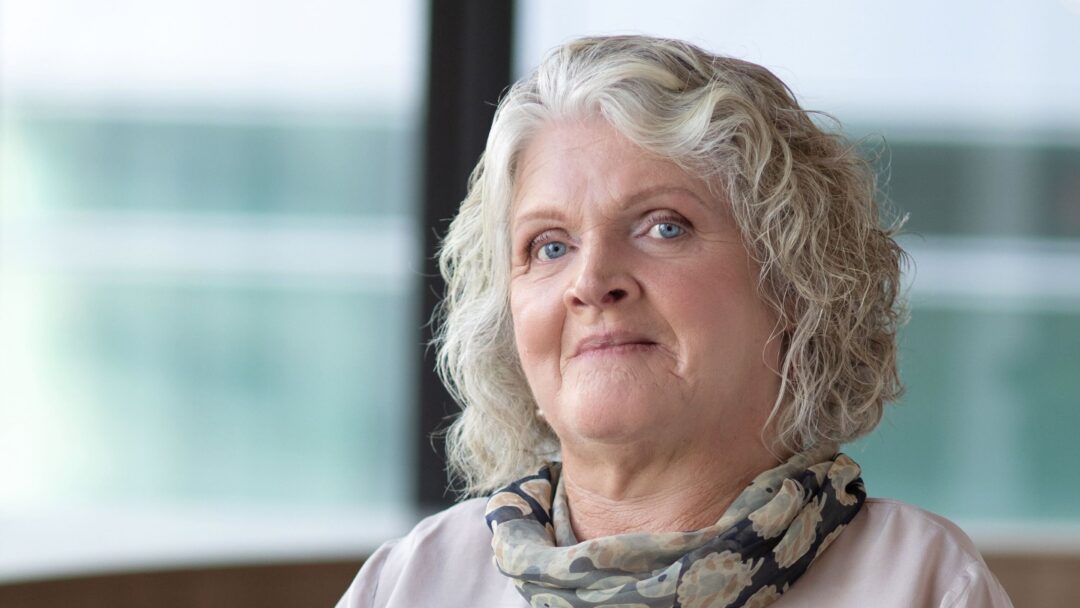
Powerd’s 1RPH correspondent, Sarah Guise, sat down with Disability Discrimination Commissioner, Rosemary Kayess, to discuss the current state of disability politics — including calls for a unified approach to accessibility in education, employment, and justice.
When asked how she would describe the current environment for people with disability, Ms Kayess says it is “frustrating.”
“We seem to have got to a point…[where] we don't seem to be able to take the next step. Education's becoming a real thing of tension,” she explains. “The Royal Commission found that we need to heavily invest in inclusive public education, yet what we see in most states is an investment in special education. Inclusive pedagogy has developed so much and the way we could be teaching in an inclusive way is still so far off.”
The Commissioner claims that although the Disability Discrimination Act (DDA) has been around for nearly 35 years, and the NDIS has been in place for over a decade, there hasn’t been enough upgrades to the systems.
“I think everyone thought the NDIS would solve all the problems. Much of the general population and especially the political classes, didn't understand specifically what the NDIS was to do and what work was required.”
“They've now found that's a very expensive gig, and what hasn't been happening is all that mainstream change that needs to happen.”
When speaking about the the Disability Discrimination Act, Ms Kayess explains how the DDA has been trying to do all the heavy lifting, describing the Act as the sole ‘“lever” for many cases to achieve systemic change, but claiming it hasn't led to significant systemic change.
You've got a system where it’s on the person with disability to take on the system, and it's a heavy load timewise, emotionally, financially. You take it to the federal court, and the burden of proof on proving discrimination overwhelmingly falls back on the person with disability.
Rosemary Kayess
“It’s not uncommon for some departments and companies to come filled up with barristers and legal teams against a community legal centre and a person with a disability. A payout makes it go away, but we still get no systemic change. That's why I think it needs to be reviewed.”
Touching on the recent hate speech debate, the Commissioner was asked whether the government should have taken the opportunity to see how similar things applied to people with disability.
“We should recognise that hate speech just isn't contained to antisemitism, and if you are going to provide access to justice to people, you provide it to all people. Not that I'm saying that antisemitism shouldn't be protected…all hate speech should be protected in the same way.”
She went on to explain how the disability community experiences hate speech and vilification in a variety of ways.
It’s like a spectrum. There's the casual, derogatory comment through to the guy that shot a person with a disability over a disability parking space. There's lots of systemic stuff that happens between valuing of people…sometimes they could be considered a form of vilification to incite hate. ‘You're taking up oxygen, costing us a fortune.'
Rosemary Kayess
Ms Kayess believes the attitudes of the government and the public stem from the eugenics movement last century.
“‘These people are taking up valuable food for other people, the workers, the true people, the real people.’ And it was reinforced during COVID. ‘It won't affect many people. It won't affect most people. It's just the people with underlying conditions,’” she says.
The fact that 98% of Australians have underlying conditions was irrelevant. They’re those micro aggressions that people put up with every day that wear them down and wear them down…It’s like Noel Pearson talks about it in the race context, the soft bigotry of low expectations.
Rosemary Kayess
Looking forward to what she hopes for the disability agenda over the coming months, Ms Kayess says she would like to see a stronger DDA.
“I'll put energy into trying to ensure that happens. I would like to see the NDIS come out of it at the end of all this pain for people still having a connection to its human right principles and genuinely giving people with disability an individual package that meets their individual needs.”
You can listen to the full interview on 1RPH.