News
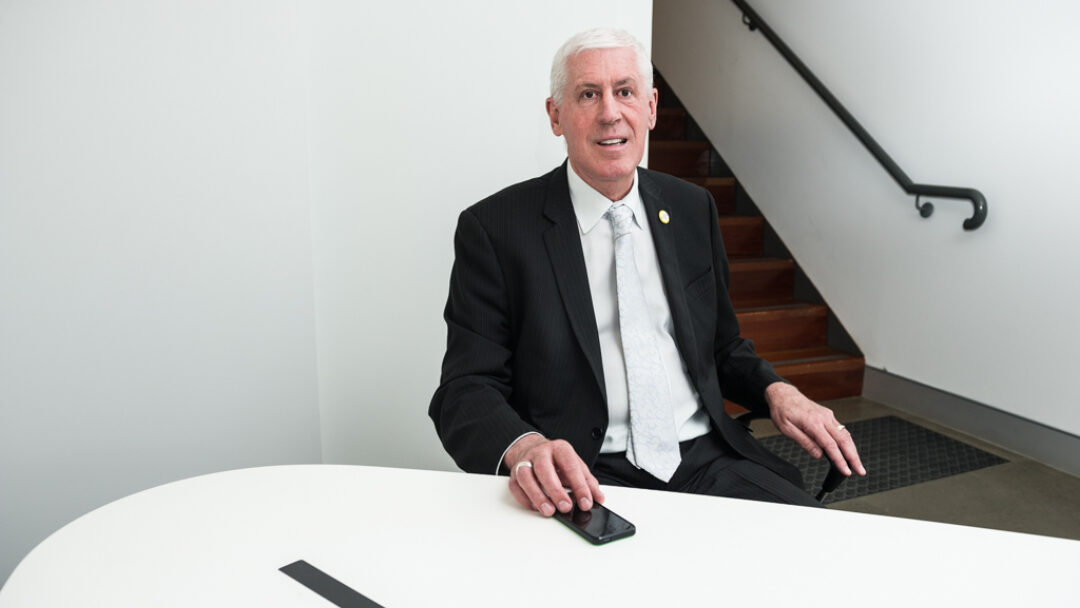
Graham Innes, a prominent human rights advocate and former Disability Discrimination Commissioner, is urging an end to what he describes as the “soft bigotry of low expectations,” drawing on decades of experience and historical firsts for the Australian disability community.
Reflecting on his upbringing, Mr Innes credits his parents for treating him no differently than his siblings, a decision that fostered the resilience necessary to navigate an inaccessible world. He explains that while society puts limitations on people with disabilities, he refused to let those perceptions define what he wanted to do in life.
“When there are low expectations of people, then many people don't rise above those expectations. But I didn't have those low expectations, so I was able to... pursue the sorts of dreams that I wanted to pursue,” he says. “I wanted to study law because…I was always brought up in a family who respected social justice... I wanted to do something in my career which would make the world a better place… one way to improve the world was to support groups of people who were disempowered.”
Despite his qualifications, the esteemed lawyer’s entry into the legal profession was met with significant resistance. After finishing law school, he recalls attending at least 30 job interviews in a single year without receiving an offer.
“People couldn't see how a blind person could operate as a lawyer... even though I explained how I completed all of the study done all the work necessary and was fully trained.”
Mr Innes eventually proved his capabilities, becoming a legal officer, Disability Discrimination Commissioner, and later the Chancellor of Central Queensland University.
Mr Innes describes raising his children as his proudest personal achievement, despite having his ability to parent frequently questioned.
“I remember an occasion when I took our daughter to the clinic and the nurse was appalled that a blind person could be responsible on his own for a child,” he recalls.
On another occasion, Mr Innes was boarding a train with his daughter going home from work.
“I had a woman approach me who asked me my name because she wanted to report me to authorities because I wouldn't be able to take care of a baby.”
He was instrumental in developing the Australian Disability Discrimination Act (DDA), which took place in the early 1990s.
“Work-wise, I think The development and implementation of disability discrimination legislation... [is my proudest achievement] because whilst we need to refresh it and revise it... it's made huge changes in Australian society that would not have occurred without that law being in place.”
Following his role in the creation of the DDA, Mr Innes had the unique opportunity to administer the law he helped draft when he became a commissioner at the Human Rights Commission in 2005.
“During that time we passed transport standards, which have meant major change to Australia's transport systems... Access to buildings is far better than it would've been without those building standards…they’re far better for people with disabilities than they would've been without this law.”
Despite this achievement, the lawyer argues that Australia should have a dedicated Human Rights legislation. As of 2026, that still has yet to come to fruition.
“Australia is one of the few democratic countries in the world... developed countries not to have a bill of rights,” Mr Innes explains.
Mr Innes also highlights the vital role of the National Disability Insurance Scheme (NDIS), explaining that while he advocates for the scheme's sustainability, state governments must not ignore the 90% of people with disabilities who are not covered by the NDIS.
“Only 10% of people with disabilities were ever intended to be supported by the National Disability Insurance Scheme…[but] State governments have walked away from their responsibilities. The other 90% need to be supported by the general systems in the community,” he argues.
For Mr Innes, the ultimate goal is a society where disability is normalised and not viewed as unusual when people with disability are going about their day.
“When the general public sees people with disabilities as parents, politicians, or athletes, they become more open to providing the accommodations necessary for their success, resulting in a more effective and stronger society.”