News
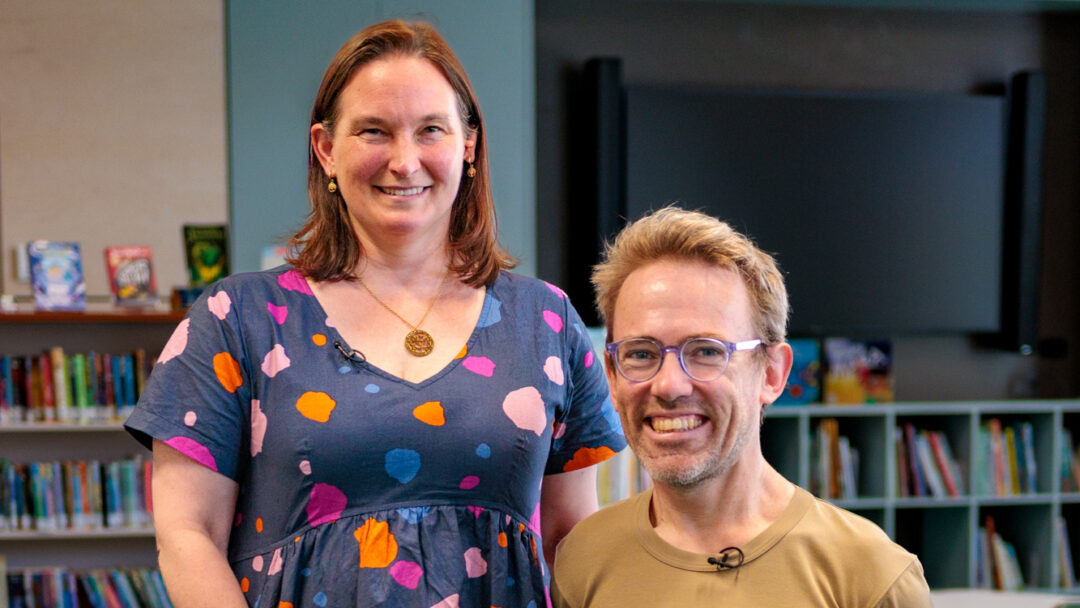
For many people with disability, navigating the education system can be distressing, but one school in Queensland is highlighting how the right supports and environments can enable people with disability to learn, connect, and thrive alongside their peers.
Powerd spoke with a student from Toowong State School, an education facility leading the way in inclusive practice through bilingual education in both English and Auslan.
Year 5 student, Josh Fletcher, is hard of hearing. He explains how he and his classmates use FM speakers, which are devices designed to help students who are hard of hearing. They're worn like a small necklace with a microphone at the bottom. The teacher or speaker talks into the microphone, and the sound is transmitted directly to the student's hearing aids.
You need to wear it a specific way so the sound actually goes through.
Josh Fletcher
Josh says his favourite subject, Math, is taught by a teacher who is completely deaf.
“He only signs, and it's sometimes a bit harder…We don't really know the vocab, but we usually have…a slide show on the screen, so he can point to the word and tell us a sign, and then we just remember it for future reference.”
With ten students who have hearing difficulties in his class, Josh believes it a benefit for the other children to be able to learn Auslan alongside English.
“Most of the kids in my class are really empathetic…they really enjoy learning Auslan. Most kids [at the school] are fluent. It’s not really been a trouble, apart from when new kids come and they have a bit of difficulty learning, but we've always managed to cope,” he says.
Toowong State School Deputy Principal, Elizabeth Fletcher, explains how the school’s unique approach is shaping inclusive education.
The success of our program is direct teaching from a teacher to a student... the student gets immediate feedback... There's no delay.
Elizabeth Fletcher
As for the students who can hear, Ms Fletcher believes attending the school allows children to foster a deeper knowledge of understanding that they can then take that out into the community.
“They leave year six with an intact second language and a huge understanding of inclusion and diversity.”
Senior Lecturer in Inclusive Education at the Department of Educational Studies at Macquarie University, Dr Kathy Cologon, says one of the most difficult things with Inclusive Education is the myth of the average child.
“We think there's such a thing as a normal child…[if] we target all our education…for this mythical normal child, then nobody's getting an optimal education.”
Dr Cologon argues that systemic changes are essential to creating truly accessible and equitable education environments.
If instead, we use universal design for learning and approach our planning… we can plan for a lot of aspects of diversity before we even know who our students are, because we know all these different forms of diversity that exist.
Dr Kathy Cologon
She believes inclusive classrooms benefit both students with and without disability.
“We have to be able to challenge our ableist beliefs and how they inform our systems and structures if we want to achieve inclusion,” Dr Cologon says. "If we listen to children and we engage children in helping us bring inclusion to a reality within our education settings, we can do so much.”
If you liked this story, you can listen to the full episode of Building Inclusion, a podcast about Australia's Disability Strategy presented by Powered Media, right here.
This podcast by Powerd Media is supported by funding from the Australian Government Department of Health, Disability and Ageing under the Inclusion and Accessibility Fund: Australia's Disability Strategy (ADS) – Community Attitudes grant program.