News
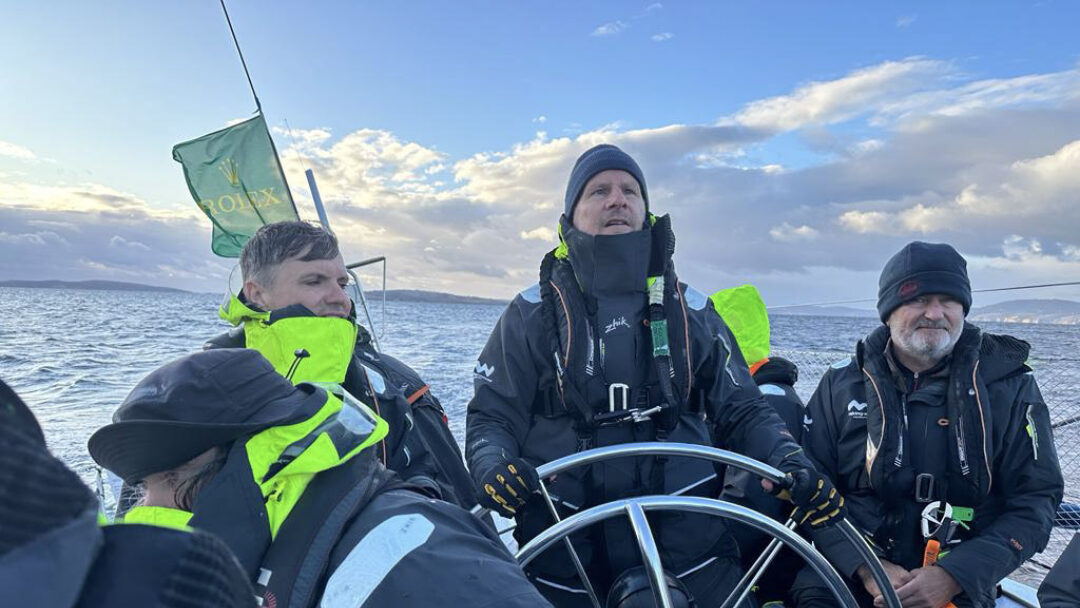
Reporting by Sarah Guise. This is an abridged interview with James Hunter.
James Hunter is a blind sailor who competes in ocean races like the Sydney to Hobart. He is also a volunteer with the Making Waves Foundation, opening up opportunities for people with disability to sail competitively.
James Hunter
I think for anyone that loses their sight, there's a point reached where you struggle to re establish your identity and to find things that will sustain and reward you going forward. And for me, I was a keen sports man before I lost my sight. So for me, sport of some kind, competition, teamwork, all that brings to one's life. I was interested in pursuing again. And I guess when I couldn't catch a ball or or find the tennis court or the cricket cricket field or anything like that, I needed to reframe my thinking.
And sailing was something that I believed would be possible. And you know, once you know your way around a boat, everything remains relatively familiar to you in terms of the fittings and the fixtures and all that type of stuff. The only thing that's changing is, of course, the condition. So for me, I was interested in finding my way back to a sport, and I wanted to re engage with some competition and teamwork, and I felt that the skills that I had learned over the time in mobility and sensory awareness on the long cane and subsequent with the guide dog, would serve me well in terms of reading the conditions and being a valuable member of it, of a crew member on a on a sailing boat.
It did mean that the boat that I was engaging with needs to be of a size where I would be able to find areas that I would be able to add value. So my days of dingy sailing, which I started in Canberra, way back when I was a teenager, they're probably gone. But on a large ocean racing yacht where you have, you know, part of a crew of, in my case, 16 people, you find your niche, you find the areas where you can add value, and you inject yourself in there with enthusiasm and positivity.
Sarah Guise
So you had been involved in recreational sailing before. Did you have any concept that you'd go on to competitive sailing when you started out?
James Hunter
No, as many parents out there would would attest, there's a point in Christmas holidays where young, teenage children get the better of them. There's a line drawn the sand. And in my case, my mum said, right, you're off to after the YMCA sailing school for two weeks to learn how to sail. And that started the joy of sailing on Lake Burley Griffin in Canberra, and it was a joy and a fun thing to do? No, it wasn't something that was going to be a focus of my life. And I'm certainly by no means professional. No, I'm not that. I'm just an enthusiastic amateur volunteering into an organization that works with disabled, disadvantaged people, and in this instance, I'm able to participate in some magnificent sort of sailing adventures that involve all the things that I was looking to inject into my life as a blind person.
Sarah Guise
Tell me about the making waves foundation.
James Hunter
Look, it's I'll start by saying Australia needs more of these organizations to to make Australia a more inclusive and friendly place. And that really is the ethos and DNA of the Making Waves foundation. It came into existence back in the early 90s when the founder, David Pesket was sitting listening to the radio one day and he heard a paraplegic bemoaning the fact that he could not find anyone that would allow him to pursue his dream, which was actually to participate in a senior Hobart shot race. And David thought, well, that's a bit rough. So he rang him up and he put together the world's first disabled ocean racing crew together in 1994 to undertake that race. Successfully, they finished. So racing was very much the focus at that stage of the foundation and providing opportunities for disabled people to, I don't know, explore who they were, stretch themselves in ways they'd never imagined. That's the initial sort of starting point. But then the flip side of the coin is it is actually making those around him and broader society aware of what's possible when when given a chance, often the biggest disability one's faces is not the physical disability, it's more the perception of what someone is capable of doing, and they were really making ways, as it were, to challenge that stereotype. And so it started from that racing focus, but then they began to deliver programs for disabled and disadvantaged children up and down the east coast of Australia, where, through sailing, they were providing disabled people struggling with their own challenges an opportunity to explore who they were and what they could do through sailing and it. Yes, it's a remarkable thing. When you get people out onto the water and the wind in the face and the salt air and all that sort of stuff, they find that there are many, many ways they can participate and indeed, reframe the way in which they they take on challenges in their everyday lives. So from 1994 started with racing, and then they began running a series of bespoke programs for experiences of people that were just really looking for that opportunity to get out and see what it was like for development programs where you're working with children and young adults to really work on the soft skills and the attitudinal things that will enable them to meet their challenges in real life and right the way through to carers. So the carers of these people, they had an opportunity to come in, see what their their kids were doing, but also build the networks around them that would enable them to work out what worked for others might be able to work for them and create that community around that so for over 31 years now, Making Waves Foundation, or as it was previously known, sales with disabilities, have been peddling that that goal of challenging and supporting people living with a disability and facing social challenges so that they can, you know, pursue personal growth and reach their potential. That is really what it's about, and it has been putting sort of seven and a half 1000 children through programs on water to live that experience and to stretch what they believe is possible and indeed challenge what those people around them think is possible.
Sarah Guise
So tell me about the crew and the boat you raced with in the Sydney Hobart this year.
James Hunter
So the Making Waves Foundation, boat or yacht, for the purposes of this, these ocean racing endeavors, is a 54 foot line. So it's a fair size boat, not as big as the maxis, which are over 100 feet, but it's a fair size. It takes a cruise 16 on board, and you have your hands full. It's a full on racing boat. There's nothing comfortable about it. It's stripped back to the bare minimum of those 16 half the crew had some form of disability, so I was the token blind person on board this year. We had hearing impaired people, we had two paraplegics, we had people with MS and acquired brain injuries. So it was an amazing crew that came together in an authentic way. You have to be honest about yourself. You have to be honest with what your limitations and capabilities are, and then you work out ways to build that team that will allow you to undertake one of the world's great ocean races and, you know, challenge yourselves in ways unimaginable in everyday working life.
Sarah Guise
How does it work on a racing yacht, you're literally out there for several days and several nights. Does the crew sleep in rotations, or are you powering through?
James Hunter
Yeah, no, it's, it's um, so this last one took just a half hour under four days, and it's basically the 16 crew is divided up into what we call watches, which are just, there's an on watch, which are up on deck, running the boat and making sure that it's safe and, you know, maximizing the speed and all the opportunities of performing well. And then the other half are downstairs, fighting to sleep. So trying to find a way to sleep. It's, it's, it's a challenge, because, as I say, it is not built for comfort. Everything is stripped back downstairs is a hot, airless and steamy area where the aim of the game is to get your. Wet weather gear off as quickly as possible and lie down horizontal so you don't get seasick. So it's a real managing self in those spaces. And all the noise and activity that goes on in running a boat means that you've you've got to find a way to sleep. And that is an art form. And for most people, it's, you know, it's probably a day, day and a half, before you get your first sort of two hours of sleep, which, you know, is basically just through sheer exhaustion. So the way, the way it works during the day is your four hours on and four hours off. So between the hours of 6am and 6pm and then in the evening, from 6pm to 6am it's three hours on and three hours off. So it's, it's constant, it's, it's, you get into the routine, but it takes a little while, and then when you're exhausted, you don't mind the noise.
Sarah Guise
Yeah, you're definitely not getting much sleep in a row. There are you? Wow, no,
James Hunter
You're in a sleep deficit by the time you arrive in Hobart, and you're also on a high, yeah, definitely. And there's nothing sweeter than the first shower and when you finally do lie down on a mattress, it's very lovely. How was the weather this year? It was. It was a challenging race. The there was 128 starters in the in the race, and about a quarter of them failed to finish. The first two days were pretty spicy, running into a really strong southerly. And on the second night, particularly around Gable Island Montague, it was gusting 45 to 50 knots and waves of sort of six plus meters. So it was testing, and there was, there were a lot of boats withdrawn through damage and or sort of seasickness with with crews Not, not able to continue. It was, it was very testing the first two days. But once we got through that. I can honestly say I've never experienced a smoother crossing of Bass Strait, and I'm unlikely to ever do so again. And the sale down the east coast of Australia, of Tasmania was just simply exhilarating. Was spinnakers up and the waters, the sea state was relatively benign. It was just champagne sounding. It was absolutely delightful. So, yeah, there was a bit of everything. But that's so often the way with these races. You know, when you're out there for four days, you will experience the very best and the very worst of you know what Huey can sort of serve up.
Sarah Guise
Does a yacht like making waves? Do you have to have different sort of safety precautions, are you sort of in a similar boat to everyone with the the inherent sort of danger and risk involved in competitive sailing?
James Hunter
Yeah, it's, it is a racing yacht. David Pesket, the founder of the foundation, when he he built that yacht, and he built it with an eye for for being able to enable disabled people to participate in racing. So a great deal of thought went into the layout of the boat. So it's there's a great deal of intuitive sense in the way things are laid out, and you are able to, in large part, find points to ensure you have three points of contact all the way. So to the extent that it's racing, the oddity is absolutely the design of it has been done with an eye to be as friendly as possible to the types of people that would be engaging in the activity. I think the so far as the racing goes, it's it's everything else is exactly the same. But when the boat is running programs for the children, we put netting up around the life rails around the outside to ensure that there's no, you know, gaps through which people can fall through. It's in these activities and with the participants involved, there is a very high standard on safety, and you are sailing very much within a risk envelope, which really is an expression of the boat you have, which is a very sound and quick boat, and the crew that you have, the nature of the crew that you have, and the experience and capability of the crew you have. So it really is putting all that together to come up with the way in which you sail the race.
Sarah Guise
Do you find you experience sailing differently since you completely lost your sight compared to before.
James Hunter
Look, it's for anyone that has lost their sight, there is the challenge of the actual loss of sight, and that's that's painful. It involves a lot of self doubt and the like, but, but me, I think the big challenge was it's, it's the the way in which you view self and how you actually address the change that's going on emotionally and cognitively. And the cognitive part is the easy part in a funny way. Because you find out what works and you just go and do it. But the emotional part of it was, is that, as any person listening would be aware you, you're always comparing yourself to what you had done or how you had done it, or how well you've done it, and so that becomes something on your shoulder that you actually need to to address. And I guess everyone's on that journey when they're when they're in that process of losing sight, or indeed having lost their sight, coming to terms with it. Speaking for myself, I think it is only when you truly accept an own blindness that you are then able to throw yourself at things with a solutions based sort of mentality on everything that you're taking on, which allows you to do things that you never would have thought possible or never would have allowed yourself to have done. But it also ensures that those people around you are clear about who you are, what you bring, and the honest way in which you engage with them. And so going to your question, is it different? Absolutely, it's different. When I was a sighted person, it would be a very visual thing in terms of setting the sales by looking at the, what we call the tell tales, the cotton on the sales, which tells you, or allows you, to really set the sails to the most appropriate way you're going to power the boat. But of course, without sight, you don't have that. You without sight, you have four other senses you can bring to the party, and you are able to do that very, very well when you are of a mind and a determination to do so. So on board the yacht, I trim the mainsail, which is the big sail at the at the back of the boat. And I'm able to do that because I'm able to use my senses of wind on the face. So I always know where the wind is relative to the direction of the boat. And I'm able to calibrate where the sail is in relation to that wind by having lashing on the on the rope that I'm holding on to. So I'm always aware of that I'm picking up the heel of the boat so that I'm able to know whether I'm overpowered or whether I need to bring it on to give it more power. I'm able to get 80 to 90% of the way there in terms of trimming it well. And then I need to actually engage others, which is I call trim. And people will tell me what's going on the shape of the sail, and then I'm able to bring it in for the last little bit. So in terms of the way in which I sail, now, it's very much on using my four remaining senses to the maximum being of a mind that or recognizing that if I'm going to do this to the very best I can, I need to actually work with and through others to achieve that, and they know when I ask, it's it's time to actually look up, because the rest of the time I'm just doing my do,
Sarah Guise
As you say, retraining your brain, retraining those skills in how you accomplish a task, and drawing on that teamwork that you've always valued too much
James Hunter
Absolutely, but it really does. I can't state this enough, and I guess it's a lesson I've learned I was I am fiercely independent, and for a while that gets you into spaces and places by virtue of that determination and independence streak. But there's a point in the journey where being independent, you become the bottleneck, and you actually become the limitation as to what is possible. You find that the world which which you define, becomes smaller and smaller. You might know that that world very, very well, but it's becoming smaller and smaller, and your activities are getting less and less. But when you are of a mind that that ain't what life's about, and you truly own the fact that it's good to be determined because it allows, it gives you the fire in the belly to do stuff. But, but if you want to be doing some of these things in some of the places that you you want to do, want to go and participate in, you need to work with and through others to achieve that. So, you know, sarling, it was Case in point that, you know, for my wife and I, we walk sort of we've done, you know, the three coach walk in Tasmania and Queen Charlotte track in New Zealand. So again, it's when we understand what the limitations are, and you develop that team and that sense of being open minded to challenge. We will be challenged. We know that. But working through these things, you find that the world opens up enormously, travel, you know, international, domestically, whatever. But it does come back through that mindset shift that that is what that sailing as a tool to enable people that are working through their identity and working through how to meet and address challenge with positivity and opposite optimism, sailing it delivers that to you in spades, but in a fun, supportive and encouraging environment. So that's that's gold, and I
Sarah Guise
Guess that comes back to what you were saying earlier about getting past that deficit mentality. The and being honest about your limitations and your strengths as well. And if you're on a racing vessel in the middle of the ocean with bad weather coming down, you all need to know your limitations, what you can do to rely on each other and to work together.
James Hunter
Sure, absolutely. And let's be clear, if you are going on onto these types of ventures, in that mindset, you're putting yourself and everyone else at risk because they can't be looking after you. You are part of a crew, and you need to fulfill your part well or better than well excellently, to the best you can without question, same time, every time. And so that that notion of free riding, or it can't, it can't be, you'll be, you'll be cruising around the harbor and doing that sort of stuff. We're not talking about that. I mean, I often use this. This is a really clear example, not only for the self, the person that's that's dealing with this, but also for those around and that is, when asked that question, I respond that, close your eyes and imagine yourself out in the middle of Bass Strait, when it's moonless, there's thunder clouds roiling overhead, the rain is horizontal across the deck. Who is blind? And the answer is, everyone's blind. And I use that because it reframes me as a blind person in accepting that in certain contexts, everyone's the same, and for those around you, they get a sense that they have to draw on self saying things, and an understanding of of what that is about. And it actually really reinforces the trust, confidence and respect across the able bodied, so called and disabled so called people on board.
Sarah Guise
How do people get in touch with making waves and get involved in sailing?
James Hunter
So the Making Waves Foundation is there's a website on the that provides all the details, but just in the in the short form, making waves foundation now operates out of five locations in Australia, in Brisbane, Newcastle, Sydney, Melbourne and Geelong. And each year we run outreach programs up to Far North Queensland. And presently, the boat is in Tasmania, following the Hobart, where we're running programs down there for kids down there. So in terms of the opportunities in this space, First, go to the making ways foundation. So go to the website that will provide the entry points, I should also say, for the for the blind and visually impaired amongst us, as you might imagine, I'm particularly enthusiastic in providing opportunities for blind and visually impaired in this space, it's been my greatest joy and my greatest development. I've truly learned to be blind and to accept my blindness with and through sailing, and I'm very keen to share that with those of a mind, to actually be in that space. During the course of last year, the making waves foundation kindly allowed me to pilot programs for guide dogs, New South Wales, ICT, so with the aim of leveraging the the sensory awareness and skills that people are trained in on the long cane and with guide dogs on the bike, and taking those skills on board a yacht, because that is the entry point To enable you to participate in an activity that you wouldn't necessarily think would be possible. And so we are now in our first year of running programs for the guide dogs to allow visually impaired people to, I guess, experience what it is like number one, but two, where they actually where it really resonates and where it clicks, and they can see how they can utilize who they are or what they bring to the boat in a productive way, like there are avenues to enable them to sort of learn sailing through some of our affiliate clubs or Sailability, and indeed become sort of a volunteer such as myself. So I work with the children as a disabled volunteer and Sailor to, you know, really challenge them in their journey and what they might be able to do. So I'm really keen to bring sailing to a segment of society that probably for many would never have thought of the joy and how it might really positively add to who they are and the lives they lead.