News
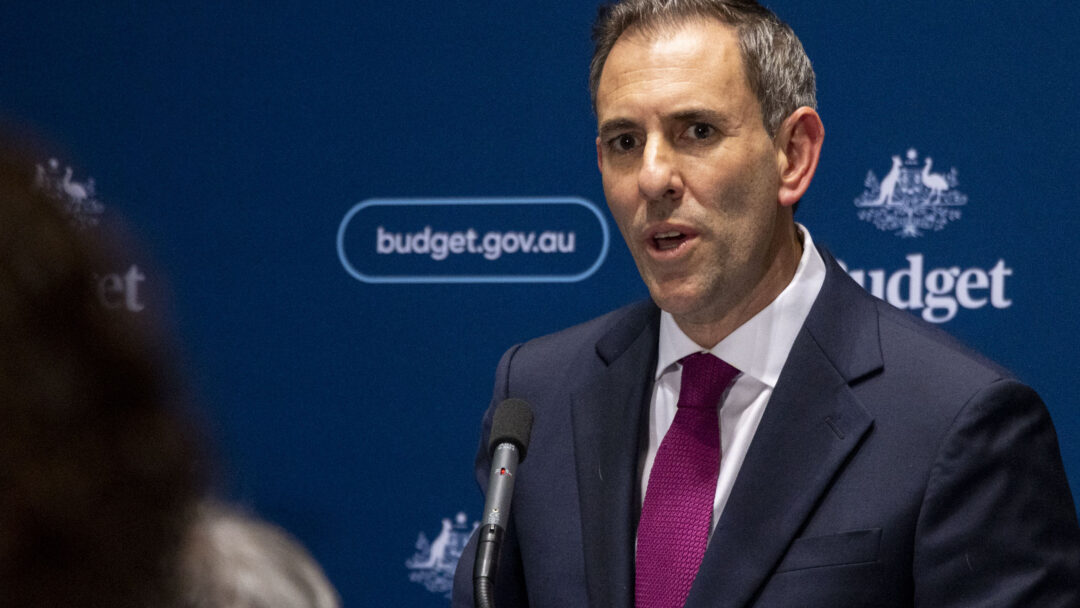
Many within the disability community will have been anxiously awaiting the Treasurer’s Federal Budget delivery overnight to find out what sort of funding was and wasn’t included in relation to the NDIS.
Treasurer, Jim Chalmers, announced in his Budget Delivery speech that the National Disability Insurance Scheme (NDIS) was a key aspect in this year’s spending measures, claiming the “difficult but necessary reform” will save the Federal Government over $37 billion dollars.
We are going to save the NDIS from itself. Our savings package will restore the NDIS to its original intent and secure its future, so it grows in a sustainable way in line with programs like Medicare.”
Jim Chalmers
A total of $1.7 billion is set to be rolled out over five years to support people with disability and improve the quality of the National Disability Insurance Scheme (NDIS).
Women with Disabilities Australia CEO, Sophie Cusworth, says the Budget has delivered a serious cost-of-living blow to women with disability, who will be left with higher out-of-pocket costs.
The Government is delivering some of its biggest Budget cuts through the NDIS and women and girls with disability will be hit hardest, and at a time when many are already at breaking point
Sophie Cusworth
Thriving Kids
The Government has announced $3 billion to establish Foundational Supports outside the NDIS will be matched by states and territories as agreed by National Cabinet. This is on top of the Commonwealth’s $2 billion contribution towards establishing the $4 billion Thriving Kids program.
$139.7 million will be used to facilitate Thriving Kids services for children in early childhood education and care settings over five years, as well as $99.5 million to empower families with the skills to support children with developmental disability or autism through Mental Health in Primary Schools and the Positive Partnerships Program.
Over the next five years, $121 million will help provide a national phone line for child development information as well as an advice helpline.
Almost $61 million has also been allocated to support workforce development and training, including dedicated funding for the First Nations workforce.
Other funds which have been set aside include supporting the early identification of children with developmental delay or neurodevelopmental difference through a Medicare funded three‑year old health assessment, an expanded Comprehensive Health Assessment Program, and a national communications campaign to raise public awareness of developmental differences and Thriving Kids services.
Fraud
A whooping $358.5 million has been allocated to develop and implement a new digital payment system to improve payment integrity and reduce non‑compliant payments over the next five years, while $280 million will be used to continue to detect and respond to fraud over the next five years.
A further $182.6 million will introduce mandatory registration of high‑risk NDIS providers, while $49.4 million has been allocated to support coordination services for NDIS participants to reduce fraud and improve service quality for participants.
People with Disability Australia Acting CEO, Megan Spindler-Smith, says the organisation is disappointed with the allocation of funding to stopping fraud within the NDIS.
We are concerned the $1.7 billion “partial offset” that aims to improve the quality of our supports, is focused on fraud, digital systems, and registration instead of people and what we need to simply live our lives.
Megan Spindler-Smith
NDIS Reforms
The Government claims it will consult on a commissioning approach for home and living supports for participants who need 24/7 support, but changes to access based on functional capacity will not commence until 1 January 2028.
The National Disability Insurance Agency (NDIA) will receive $436 million to continue supporting NDIS participants, as well as $200 million over three years to establish an Inclusive Communities Fund to support community organisations delivering group-based community participation activities and individual capacity building support for NDIS participants.
National Cabinet has agreed that the escalation rate of state and territory NDIS contributions would be in line with NDIS expenses growth, capped at eight per cent, from 1 July 2028. The Government hopes that reducing NDIS expenditure, due to the Scheme’s reforms, will reduce the cost of the scheme to states and territories by $2.8 billion from 2028.
The move is proposed to support the Government’s effort to restore the NDIS to its original intent and secure the Scheme for future generations, projecting to reduce growth by almost $38 billion over four years from 2026.
People with Disability Australia President, Jeramy Hope, explains that the organisation is deeply concerned about the disability community losing access to essential disability supports before equivalent alternatives are fully operational.
It is devastating that the most coordinated and focused government action since the Disability Royal Commission has been to cut the supports that are proven to reduce the abuse, neglect and exploitation our community has and continues to be subjected to,” he says. “We will continue advocating for a more meaningful response that actually moves the dial on our full inclusion.
Jeramy Hope