Anthea:
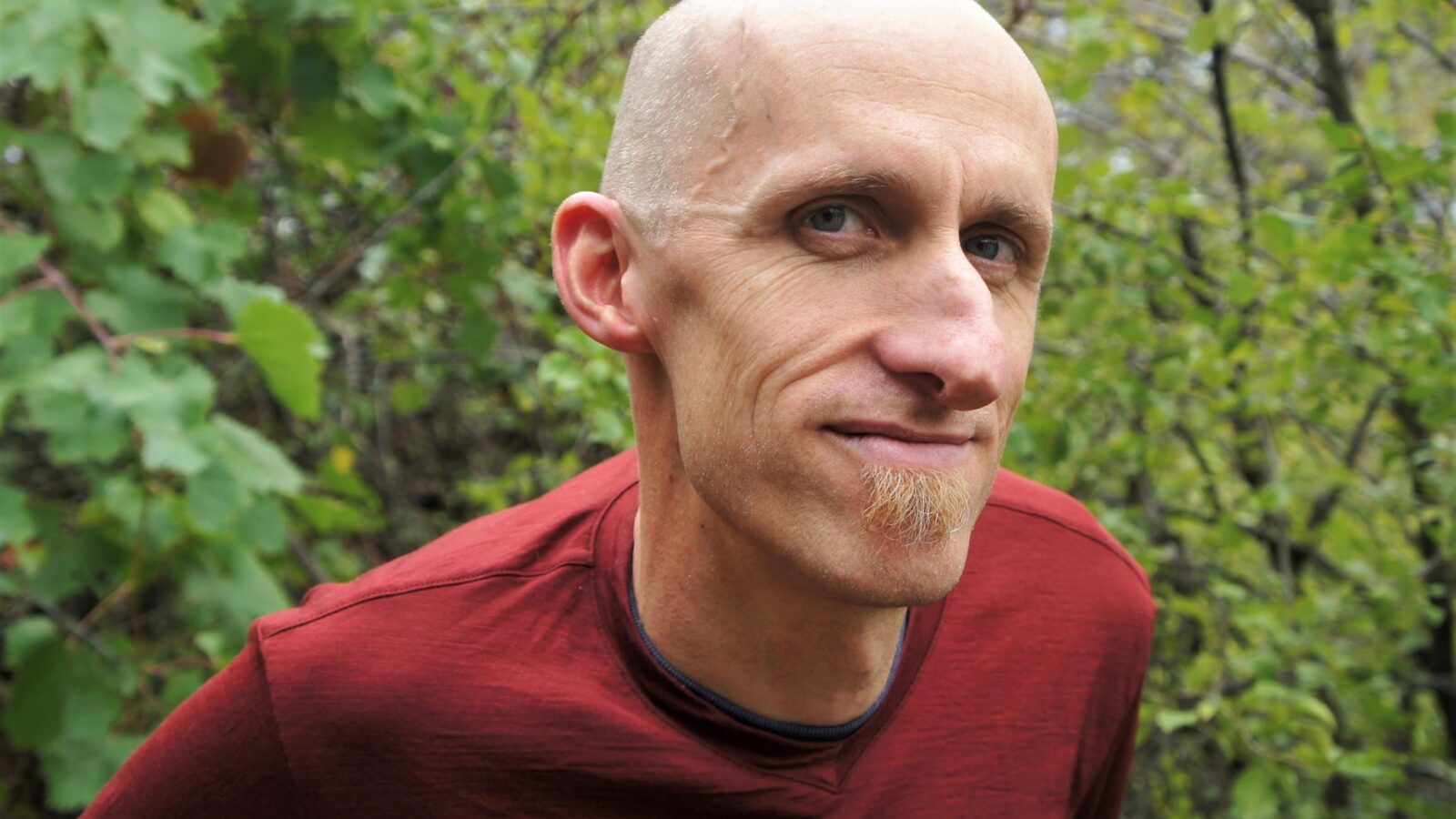
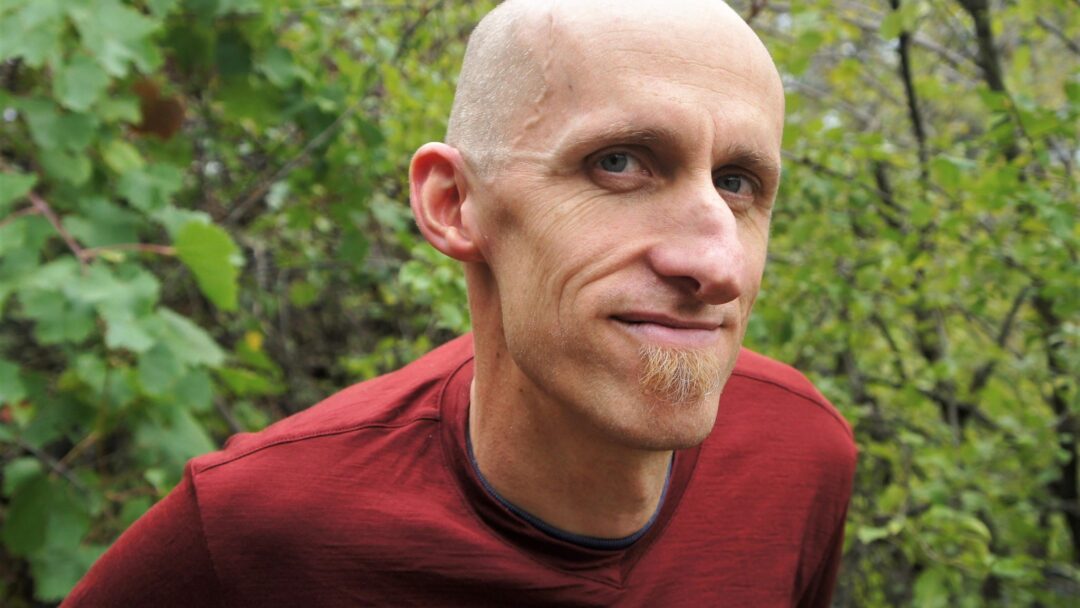
This is Sideshow on 2RPH with Anthea Williams. And today we have Dr. Andy Jackson. Andy is an award-winning poet and essayist and a teacher, and he works at the University of Melbourne. Andy, welcome.
Andy:
Thanks, Anthea. Really good to be here.
Anthea:
So, first of all, I'd love to find out, how did you discover poetry?
Andy:
Ah, look, it's, I, I've got such a, um, a familiar origin story, which I've told to a number of people. This is all true, all true, and very much true. Um, I'll get to that in a second.
But the, the external part of it is, I, I keep forgetting the really practical thing of, basically someone came up to me, a good friend and said, "I wanna go to read some poems at the open mic, but I'm too scared to, so come with me."
And so I did that, and, uh, eventually as the sort of readings went on week after week, I kept going and she dropped away. And I just found it so much of a, a really powerful community to be a part of. I think the deep reason is much more to do with who I am in my body and in myself.
Uh, my sense of what I love about language, um, what poetry enables you to do, how it helps you to orient yourself in the world, um, and connect with other people.
You know, like, I mean, we, we can get to this, but one of the biggest things for me was really being physically and visually different, and that really alerted me to all the dynamics of how we treat each other as humans. I'm like, how do I deal with this? How do I grapple with it? How do I make sense of it? And somehow, yeah, poetry became the way that I, that I did that and that I keep doing that.
Anthea:
That's lovely. Yeah. I,-
Andy:
Thank you.
Anthea:
... I, I think it'll be lovely to chat to you about that, because I do think that disability often does lead to becoming an artist. But how old were you when you started going to these poetry nights?
Andy:
It's, I feel like I was sort of a late starter. Like, um, I don't remember writing poetry as a kid. Um, I did write little things, you know, in, in exercise books and wrote little journals when I was younger as a teenager.
But, uh, in terms of poetry, yeah, going to these open mic things in Melbourne when I was young, I think I would've been sort of mid to late 20s when I started. Um, and it was a very gradual thing. It became more and more important to me as the years went on.
Um, I put out like a self-published little book in around 2004, so that was when I would've been, yeah, early 30s.
Anthea:
And now you have a PhD in poetry?
Andy:
Mm, yes, I'm still getting used to being referred to as doctor. So, um, it's a weird thing, right? Like, um, I didn't plan this, you know, it just sort of evolved and suddenly I find myself thinking like...
You know, even when I first started writing poetry, because it was part of this sort of live poetry scene, which is deeply democratic and also has a kind of strain of, um, you don't need to study, like, um, you just do it yourself. And so back then I was really feeling like, "No, I don't need to," you know?
Uh, I didn't think of myself as someone who was gonna be drawn into academia, but yeah, I, I did find myself after a while, probably 2010, maybe, starting to think...
You know, I'd, I'd written all this stuff about different bodies, about deformity, about disability, and had started reading things and trying to kind of connect up with other people who were doing some thinking in that area, other poets, other theorists, and started realizing that there wasn't a lot of stuff specifically about disability poetry.
And it really occurred to me that, yeah, sometimes you have to do it yourself, uh, you can't wait for someone else to do it. Yeah, and I enjoyed thinking about it. I enjoyed sort of diving in.
Um, I, I should pay tribute to a American author by the name of Tobin Siebers, who wrote a really amazing book called Disability Aesthetics, which is about the visual arts. And it really kind of blew me away when I read it.
And it became a kind of, "Ah, hang on," you know, uh, it, writing in a really deep theoretical and intellectual way doesn't have to be abstract, it can be really powerful and relevant. And, and yeah, he, his, that book is sort of really influential for me.
And it became a kind of, "Oh, hang on, what if I transpose that idea into the world of poetry? How would that work?" And I'm, I'm still trying to do that now, but that was part of the, the focus of the, the PhD.
Anthea:
And your PhD did really well. Like, I know you won a university medal for it. Can you tell us a little bit about what the PhD was about and the process of writing that?
Andy:
Yeah, yeah. Look, I, one of the really fantastic things about doing a PhD in poetry, um, and in creative writing is that you do it as a sort of hybrid mode.
You, you write, uh, well, what I did was write, uh, a large suite of poems about 80, uh, and I also wrote like a short thesis, um, you know, not that short. It's quite extensive, but shorter than you would usually write. So I could kind of switch between the two modes.
Um, when I got exhausted from writing really tight, dense, philosophical stuff, I would take a break and relax and write some poems. And after a while, if I was a bit lost and not sure what to do with a poem, I could move back into the philosophical work.
Basically what I was looking at was this whole idea of bodily otherness. So, I used a particular, I guess, post Holocaust Jewish philosopher called Emmanuel Levinas. I looked at his idea of the other as being not just someone strange, but also someone who is intimately close to us and someone for whom we have a responsibility, someone who is part of us, really.
I looked at that and I investigated that and how it works in terms of the actual mechanics of poems, like how they move, how they sound, how they feel in a bodily sense. And it, it was really, uh, the start of a long process. I think there's much more to write, but it was a good way to kind of start thinking about, yeah, how do poems work?
Um, how do they help us to feel our way towards another body and, uh, particularly bodies that are different to ours, but also bodies that kind of fall short of what's considered to be normal or acceptable by the broader culture?
I was really also hugely influenced by, um, another wonderful, um, American academic, Rosemarie Garland-Thomson. She wrote a fantastic book called Staring, uh, which is a really, uh, subtitled, Staring: How We Look. And it, her thesis basically was that as awful as staring can be for those who are on the receiving end, it's also a potential human encounter, you know?
There's an uncertainty around it, and it has some potential to, for the person doing the staring to learn something, um, if there is the, the openness to encounter. And I think what I wondered was really or hoped, really, was that a poem might be a, a way to generate those encounters and that, yeah, a poem can be a really deep, intimate, personal, uh, transformative experience.
Anthea:
Yeah. That's great. I love that idea of a poem being a way to generate those encounters, but it's also generating those, um, those encounters more on your terms.
Andy:
Absolutely. Yeah, yeah.
Anthea:
Yeah.
Andy:
Because it's such a, you know, we, uh, any of us who are different for whatever reason, um, you know, in terms of disability or in terms of cultural background or gender expression, there is this sense that other people determine who you are and very much shape how you feel about yourself.
So, to be able to have a kind of more agency and autonomy in that is a, a really powerful experience for me, but also for anyone else who sort of reads it vicariously and sort of can go, "Yes, I, I understand that."
Anthea:
Mm-hmm.
Andy:
So it's, uh, yeah. I'm, I'm interested in that. I'm interested in, you know, um, being able to say it how it really is, but also to maintain a kind of privacy or mystery as well that, you know, um, I'm not laying everything out and it's sort of impossible to know everything.
Part of the amazing thing about us sharing the world together is that there is a kind of mystery to each other and a sense of awe that we should have around the other person that is, I think, sometimes missing, that we, we rush to understand. Whereas it's good also to be a little bit unsure and to be sitting with that uncertainty.
Anthea:
Mm. I think it's time for a poem. I'd love you to read us-
Andy:
Okay, yeah.
Anthea:
... a poem now.
Andy:
Yeah, yeah. I'd love to. Um, I, I thought about this for a while, uh, which one is gonna be most appropriate to read. And the actual first thing that came to mind is the anthology that I was co-edit, that I co-edited. Um, it came out late last year, and it's called Raging Grace. It's, uh, subtitle is Australian Writers Speak Out On Disability.
And I brought together about 23 writers to write poems and essays collaboratively. So, uh, a few people wrote a few solo pieces, but everyone wrote collectively and wrote in pairs or trios. And it just became a really interesting way of breaking down that whole assumption that we're all on our own, you know? Um, so it was some beautiful kind of weaving together of stories.
This particular one, particular, uh, piece I wrote with a brilliant Melbourne poet, Angela Costi. We both have rare genetic conditions. Um, hers, I think, is much more rare than mine. Um, it's not a competition. Um, I have a condition called Marfan syndrome. And yeah, I think having that growing up, it made me wonder who else had it,-
Anthea:
Mm.
Andy:
... you know? Made me look around for who am I connected to, who am I... You know, like my, my father had it, but he died when I was very, very young. So there's this sense of kind of, where are my people, you know?
Anthea:
Yeah.
Andy:
Um, and she had a similar thing as well. Uh, I won't read the whole thing 'cause it's quite long. I just wanted to read two extracts. Um, and these are both sections that I've, that I've written. And it starts with thinking about those, all those different possible connections that I might have. And it ends really with, yeah, a sense of the present day. So, the poem is called Rare.
Here are some other stories. I made my home at the outskirts of the temple complex out of the way of the priests, but sitting where pilgrims could see me as they approached, a tin cup to catch coins, my body a warning and a promise.
Or, I appeared unremarkable at my birth, until my bones began to grow in an impetuous fashion, torso clenching into a fist, pressing my heart and lungs into a space too small.
Or, I survived, but in a remote cave, smudged with a mystical bitterness, visited by other outcasts, whose hands reached out to touch my hunched back for prophecy or consolation.
Or maybe I was never born, the prenatal test results causing a look of concern on the doctor's face which my mother couldn't resist falling into.
I have to tell you these things that never happened, or what happened to others like me, and will happen again, before I can think of what did. For too long, I have felt alone in this body. The past, an inaccessible crypt. The future, a mirage.
I think of a colony of termites, their mouth parts at my cartilage, aorta, the lenses that allow me to see this world. Other times what comes to mind is a fierce seed poised to germinate and bloom into alien beauty. Metaphors fail us as much as bodies. Still, we persist.
Marfan may be a genetic baton, but it has always been my bones, my very material. I'm here because it is determined to be part of the human story because I have not been overwhelmed.
I'm extracting the resources I need from it. Each time I come back up to the surface smudged, shaking, wanting kin, a species of future.
Anthea:
That's really beautiful.
Andy:
Thanks, Anthea. Um, I, what I found so fascinating about writing with another person, with other people is somehow you just, well, for one, you kind of, you don't overthink it. It's a bit like doing an interview. You can't kind of, "Oh, hang on, I'll just sit here and think for a while." You, you have to kind of come up with something.
Anthea:
Mm.
Andy:
Um, and so we did that. We, we wrote without thinking too much, but also you are, you are responding to another person's voice, and so you start accessing aspects of yourself that you may not have accessed before. Yeah, it's a really beautiful, kind of leaning into each other, which I loved.
And yeah, I think to start thinking about that, those parallels, you know, what is it that we, we share and what, what is it that are perhaps different between us was a great, um, experience. And yeah, I'm really proud of that piece, um, what we wrote together because it, it, it's almost like a model for the whole thing that we're, we are sort of trying to find an affinity and a solidarity together.
Anthea:
And I love also the way you are reaching back into history and, and also possibly reaching forward into a time when, you know, people like us might not be born.
Andy:
Yeah, yeah, that's right. I, I think of that, um, unfortunately more and more now, you know. I think the world is, you know, uh, even though there has been a kind of a tremendous increase in visibility and in voice being given to, um, people with disabilities, there is still perhaps even more of this kind of sense that we're still an expense or a complication or a, a difficulty.
And I feel yeah, really un- uncertain about how it's panning out for the future. I see so many fantastic disabled voices and some really powerful allies. But yeah, there's a, there's a really a difficulty in, in the, what we're up against, I think.
Anthea:
Mm.
Andy:
Uh, yeah, I'm, I'm still inevitably hopeful because hope is not kind of a definite, this is what's gonna happen, but hope is this sense that you have people around you and yeah, we, we, we have a pretty tremendous community.
Anthea:
Yeah. Yeah. Can you tell me a little bit about how you put together Raging Grace? Did you put together the writers group yourself? How did you facilitate that?
Andy:
Yeah, yeah, yeah. It was done under the, uh, auspice of a fellowship with RMIT University. They wanted a creative writer to look at this whole idea of the future of health.
And when I heard about the project, I thought, "Well, actually, the best way to tackle that is not me individually, but the best way to tackle it is to gather a whole bunch of people with a variety of experiences and backgrounds and temperaments and aesthetics. And get them all together in a room, uh, physically or virtually, and write together and see what we can come up with."
Um, so I did. I selected, you know, invited all those people in. A few people I, who I invited couldn't make it, but most people could. And yeah, we had, I guess we, they're sort of workshops, but really they were just conversations.
Uh, there were a couple of Zoom meetings and there was also an in-person event where we would sit together and talk about, you know, what it is that, um, makes life inaccessible or difficult or overly complicated or painful, which were really tender and open and vulnerable conversations?
But we also talked about what is it that would, that could change? What would make things better? What would be daydream small or big? Uh, so it really had both aspects of that. And we, we sort after those conversations, went off into pairs or trios or four or five and started writing together.
Yeah, it was a really, what I didn't expect necessarily, that there would be a, a book, but, um, it came really quickly. Uh, a lot of people were just really keen to, to talk and to write and to imagine.
Anthea:
Hmm. That's fantastic. Um, I wanna recommend to you a film, so it's quite a different medium, but, um, talking about not feeling alone. Last season we interviewed an amazing filmmaker called Ella Glendining and, um, she also has a rare disease.
And, um, she's looking back into her childhood, but she also, um, is trying to find someone else who has a body like hers and she, and she does. And it's, it's such a remarkable film. Um, uh, you know, I really recommended, it was at the Sydney Film Festival, I think in 2023, so.
Andy:
Okay, well, I'll have to track it down.
Anthea:
Yeah, I think there's a real hunger in the, um, disability community to, yeah, not feel alone.
Andy:
Yeah, yeah, absolutely. And what's quite powerful is to kind of realize, yeah, that it's, yes, there's a really... I- It's interesting. I have been to some conferences of people with Marfan syndrome and there is a kind of particular physicality that people with Marfan syndrome have.
They're usually tall and thin and long-limbed, and there's all sorts of other things, but you recognize your kind of people with the same condition. They go, "Ha, they're, they're my people." But there's also something powerful about kind of recognizing that affinity on some kind of social level as well.
That even if someone doesn't share the same genetic condition has their situation can be really different. But when you are with someone who experiences a kind of parallel, what's the word, marginalization? You know, that's a really powerful thing to be like, actually, you know, I'm, I've got a different cultural background.
I, I'm, I'm not the same kind of in terms of my, uh, the way my brain sits together or my experience and my age. But we share something and that's really potent. And it helps me also to think more about what I have in common with people who aren't disabled, you know?
It's like there is always these kind of affinities and connections that we share with, with everyone, including, you know, the, the birds that I can hear coring in the background and the, the mushroom that is sort of filtering through the ground and we, we're connected. It's, um, yeah, the disabled community has kind of fostered that awareness in me, I think.
Anthea:
Mm. So I know that you, um, also write essays. If you've got something that you wanna write about, how do you decide if you're gonna write an essay or you're gonna write a poem? Or does it just happen?
Andy:
It usually, there's a feeling I think you get as to whether it's going to be one or the other. I've, I've certainly had the experience where I start writing one kind of poem and then I realize that that, that approach isn't working, so I change it into a different kind of poem.
Um, but I've never had the experience of swapping modes entirely. I always feel like... It's hard to describe what the difference is, but for me, a an essay is usually a sense of, I'm wanting to explore a topic more comprehensively, more, uh, up close, more in detail to get into the grain of it.
And the poem is much more like a, a photograph, much more like a quick snapshot, a quick sense of, um, perhaps one aspect, uh, which leaves a lot of things open and there's a lot of unresolved things in a poem.
Yeah, which also happen in an essay. But, um, yeah, it's sort of a different, uh, sensation, I think, a different impetus. Having said that, I think I'm primarily a poet and I will, I keep going back to it. I've been slowly writing a book of essays and, uh, what gets in the way is that I keep writing poems, so it's not a bad problem to have.
Anthea:
Do you think you'd be willing to read us another one of your poems?
Andy:
Yeah, absolutely. Um, I thought I should read from Human Looking. Yeah, look, I'm so proud of this book and I know that it's, it's sort of spread out into the world in a really interesting way. Maybe I'll read The Change Room.
Uh, this is one of those ones that I, I, I really agonize over poems and I really work hard on them, less than I used to. Um, I used to really, really tinker with every little detail. I'm much more happy to let things be open and imperfect now.
Uh, but this one took a lot less work than some other poems and sometimes they come out really quite easily. Uh, so this is called The Change Room. Yeah, it's about the kind of vulnerability of public swimming spaces, but also how kind of surprising that vulnerability can be. So, The Change Room.
This morning, walking almost naked from the change room towards the outdoor heated pool, I become that man again, unsettling shape to be explained.
Such questions aren't asked to my face. Children don't mean anything by it, supposedly, so I shouldn't feel as I do, as my bones crouch into an old shame I thought I'd left behind.
Chlorine prickling my nostrils, a stranger compliments me on my tattoos and shows me hers, a dove in flight over a Greenpeace sign, as if the canvas was unremarkable.
She turns and limps away, and something makes a moment of sense. I lower myself into our element and swim, naturally asymmetrical and buoyant.
Quite some time later, showering, the man beside me is keen to chat. How many laps we've each done, how long I've lived in this town, the deep need for movement. Speaking, our bodies become solid.
Anthea:
That's beautiful. Thank you so much.
Andy:
Thanks, Anthea.
Anthea:
Thanks for joining us on Sideshow this month. I'm really looking forward to reading more of your work.
Andy:
Oh, thanks so much. Yeah, it's been huge pleasure. And, um, congrats on, on what a great show. It's been really fascinating hearing some of the other episodes.
Anthea:
Thank you so much. You are on to 2RPH with Sideshow. Liz Cooper, what are you seeing and not seeing this month?
Liz:
This month, what I'm not seeing is Liz Martin and Michael Bridges playing two magical gigs, Friday the 2nd of May and Saturday the 3rd of May, in the town of Kandos in a little venue called Kandos Kitchen.
Kandos is a lovely little town which is located in the Central Tablelands of New South Wales. And some may be familiar with it because it's actually home of the Cementa Festival. But the town is situated sort of between Mudgee and Bathurst and the Kandos Kitchen where the show is being played is a sweet, intimate venue, which in my opinion, is perfect for a Liz Martin gig.
Tim Ritchie from ABC Radio National once described Liz Martin's music as, "Evocative, alluring, and strangely comforting." And I feel like this quote just so nails the Liz Martin vibe. Anthea, I know you are also a big Liz Martin fan 'cause we've been to several of her gigs together.
Anthea:
Yeah, I think her music is awesome. It's really, um, it's really folksy kind of bluesy kind of look, I'm no expert when it comes to talking about music genres, but there's just something really sexy about her sound.
Liz:
Oh, my gosh, yes. Sexy. That is it. It's so mesmerizing seeing Liz Martin play live. For me, her music is like an intimate journey. The songs feel like storytelling by a campfire or something. Don't you feel like it's got this really intimate storytelling vibe?
Anthea:
Yeah, absolutely. So, what is it that you are getting to see this month?
Liz:
Okay, I'm very excited. What I am seeing this month is under the Big Blue Sky Exhibition at Casula Powerhouse Arts Center. But more specifically, I'm seeing the immersive underwater themed installation titled Rainbow, Mermaid, Fireworks by Emily Crockford and Rosie Deacon.
Did I also mention this is actually a dance party? Yes, it's an underwater dance party. So, first I'll explain. Under the Big Blue Sky Exhibition, as a whole, explores the color blue through the lens of 15 artist projects, which include Studio A's, Emily Crockford and Rosie Deacon.
I personally think the name Rainbow, Mermaid, Fireworks (laughs) says it all and it fills me with so much excitement to think about what Emily and Rosie have created in this immersive exhibition, which is also, as I said, an underwater dance party.
So they're gonna take over the Upper Turbine West Gallery at Casula Powerhouse Arts Center, and will transform the space into a magical underwater world, which is a kaleidoscope of color, twisted textiles, sequined sea creatures, smoking sharks and glittering mermaids. And of course, with music, music, music. So you can dance, dance, dance. I'm very excited about this.
I love these artists. Emily Crockford is a self-described rainbow queen and is a gifted and hard-working artist. She's bold, she's energetic, and her collaborations with Rosie Deacon, pure magic. This exhibition makes me really excited for May and I'll be taking my four-year-old and eight-year-old nieces to this one because it is for kids and adults alike.
Anthea:
I have a question.
Liz:
Yeah, girl.
Anthea:
Will I get wet? Do I need to get my swimmers out?
Liz:
Um, I would always bring my swimmers, but I don't think you will get wet. (Laughs).
Anthea:
Just checking.
Liz:
I think it will just be fun and I feel like this will be one where you wear your glitteriest, glitteriest clothes.
Anthea:
Can't wait. Now, just a note on the Kandos Kitchen and Liz Martin's gig there. It is an accessible venue, just not accessible to us because of where it is. I'm gonna get Liz to play us out.
MUSIC:
I can't believe two weeks and seven days later.
Still, not with me.
A warning to all those in favor of the...