thea:
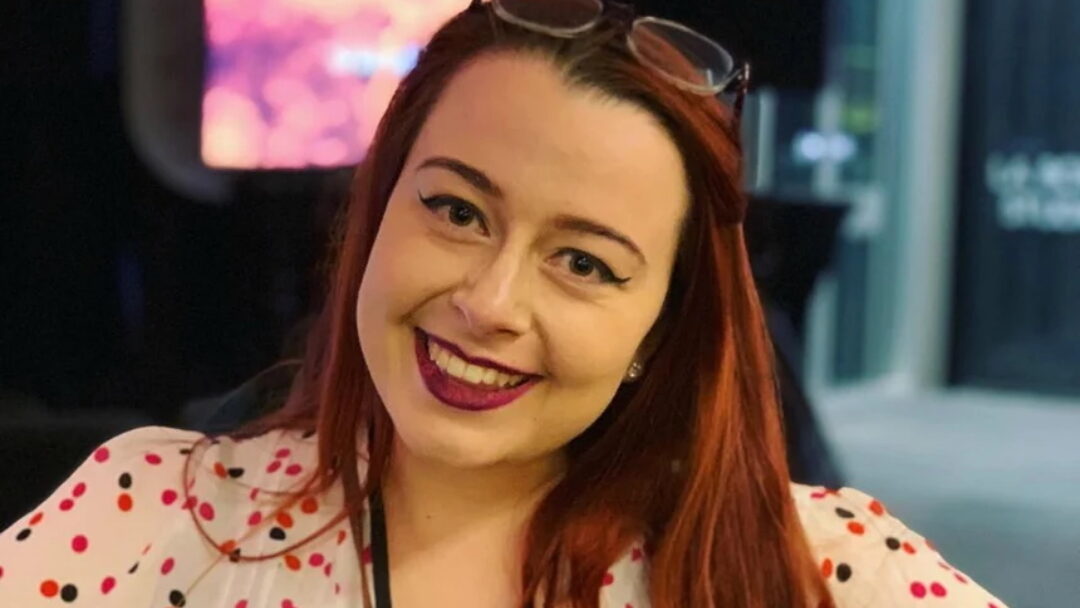
This is Anthea Williams. Welcome to Radio 2RPH With Sideshow. Today, I'm joined by Madeleine Little. Madeleine Little is a performer, theater maker advocate, and the director of Brisbane's Undercover Artist Festival. Thank you so much for joining us today.
Madeleine:
Thank you for having me.
Anthea:
So, Hilary Duff-
Madeleine:
(laughs)
Anthea:
... I hear that you wanted to be Hilary Duff earlier in life. Was that Lizzie McGuire era or are we talking younger in How I Met Your Father?
Madeleine:
Uh, we're talking, um, particularly, like, in my childhood, there was Lizzie McGuire into, um, Cadet Kelly as well. There was that whole, um... I don't know what they call it, the drill team dancing and throwing ribbons. And I don't know, but, um, when Hilary Duff was in her acting and singing prime, that's who I wanted to be or at least the, the kind of role I wanted to have one day.
Anthea:
Fantastic. And you do act and you do sing.
Madeleine:
Oh, yeah, I dabble. I dabble. I do a lot more arts management these days, though. (laughs)
Anthea:
Yeah. Yeah. But tell me about some of your recent roles, because I know you've had a lot of success recently.
Madeleine:
Oh, you're very kind. Um, a few years ago, I had the pleasure and the privilege of performing in The Normal Heart by Larry Kramer, which was presented by Ad Astra Theatre up her in Brisbane. And Ad Astra is doing some incredible stuff up here, so, um, highly recommend to anyone interested in the indie scene to, um, take a look. But they, yeah, they made the decision to put The Normal Heart on and I had the chance to play Dr. Emma Bruckner.
And initially, I, I actually said no, because I thought I was too busy and too overwhelmed and I hadn't acted in a few years, um, especially since my access requirements had changed, but, um, thankfully I was able to share the role with another actor, Janelle Bailey, and that enabled me to kind of pick the performance schedule that met my energy levels, which was really, really great, so...
And that, that was also my first time playing a role that wasn't based on myself, which is really interesting that I'd gone through university and apart from a student production here or there, using air quotes, professional work that I'd done, um, had been somewhat autobiographical or character based on some version of me.
So to step into the wheels of Dr. Emma Bruckner who was this, you know, in the plays, this powerful doctor trying to save lives and, and it was just something completely different and overwhelming, but it was fantastic and it was a huge challenge but I loved every second of it. Um, yeah, it was really great. I haven't acted since, but I'm dying to.
Anthea:
That's fantastic. And I love that you shared the role. What a brilliant way to deal with access.
Madeleine:
Yeah, it was huge. It meant that I... I always knew in the back of my head, if something happened and I couldn't perform that day similar to when you have an understudy or a cover, you know, you've got someone to tap into. But it also... Like, that preemptive planning of I know that if four shows a week might be my limit, I can stagger them. And Janelle was so kind and wonderful. Um, she's a non-disabled actor who was really keen on making sure that she had my insight and, and when we were in rehearsals, I was a bit on wheelchair using 101 [inaudible 00:03:33] here or there. (laughs)
Anthea:
Mm-hmm. Yeah.
Madeleine:
Um, but it was, it was really wonderful 'cause it took the pressure off me trying to shift my body and how I operate into what is, you know, the traditional way of doing things, where actors are expected to do eight shows a week or, or what have you. Uh, yeah, it was huge.
Anthea:
And, you know, the thing is in the industry, so often you do have more than one actor in a role. Like, if you're-
Madeleine:
Yes.
Anthea:
... if you're running a longterm musical, you need to be able to have more than one actor in a role, you need to have swings, you need to have understudies, so it makes sense. And, and I also have done shows where you've had actors under 15.
Madeleine:
Yes.
Anthea:
And I know often the adult actors who've been doing every show have loved that... They've loved having different kids and the energy that that brings, because you've got people who are rested coming in to do that Sunday show.
Madeleine:
(laughs) Yes, that's just it. And I, I feel a little bit, um, guilty sometimes, because the... You know, um, in The Normal Heart, she's not in every scene. She's in one or two scenes in act one, three or four scenes in act two, um. So I think it's like a two and a half hour show and I'm on stage for maybe 15, 20 minutes if that. Um, but I just kind of roll on in, having a day or two off, and you'd see the other actors and it's a big, really emotional work. And you just look at them going, "Okay, they're gearing up for another night. They're trying to find the energy." I'm like, "Hey, guys, how you doing? Like, (laughs) let's do this."
Anthea:
Yeah.
Madeleine:
Um, so, you know, let's just say the Tim Tams in the green room, uh, proved to be very, very needed. (laughs)
Anthea:
Yeah. Yeah, absolutely. But also, like, good on you for getting your access needs met before-
Madeleine:
Mm-hmm.
Anthea:
... you'd reached your limit, 'cause so often people only ask for help when they're really at the edge of the wall, and it's so great not to do that.
Madeleine:
Absolutely. And I, I really do credit the fabulous team at Ad Astra as well, because they were committed to making it work. We had to do the show... Um, at the time, they were based in this, um, very old building, which is, you know, we all know that old buildings aren't super accessible, but it was down to the little things. Like, as I'm wheeling down the, the hallway, um, my knuckles were grazing a little bit on the cinder block walls because it was dark, and so they just, uh, went out and got battery-operated sensor lights, so anyone actually going through that hallway could see. And there were no more knuckle grazes, unless I wasn't looking, and that's user error.
Anthea:
(laughs) Yeah.
Madeleine:
(laughs) So, like, they took those things really seriously and, um, they really showed a lot of care as well with checking in, i- in, but also in a really respectful way. I think sometimes people might inadvertently overcorrect and accidentally treat you a little bit like a kid when they check in, but it was very professional, very respectful of me and my needs and encouraging me to give the feedback. And they do whatever they could within that, so very excited. They're, they're, they're taking over the building that Brisbane Arts Theatre, um, stood in for many, many years and they're improving access and creating, you know, even more easy pathways. So I think it'll be really great for future independent disabled artists if they wanna get involved too.
Anthea:
Fantastic. You are also a massive award winner. So you won the Stella Young Award, you won the Arts and Disability Award. What place do you think awards have in terms of supporting? And, and I know a lot of these awards were at the first stages of your career. What place do you think they have in supporting emerging artists?
Madeleine:
It's really interesting that I've, um... And there's no way to say this without sounding obnoxious. Of all the awards that I've won, um, th- there's only one that isn't specifically tied to the word disability. I think that that's a really interesting thing to raise.
So when I was fortunate enough to receive the Matilda Award for my performance in The Normal Heart, it wasn't, you know, best supporting actor and independent production disability edition. It was just, you know, supporting actor. And that, for me, felt, um, in some ways, more overwhelming than the other awards simply because I think that there's always this gap between, like, the mainstream, using air quotes again, the mainstream and the disability arts world, where I feel that, on some level, um, I always kind of knew that there'd be a space for me in the disability arts world that I could maybe have a career there.
Um, so a lot of those, you know, emerging awards, they were really important in that they gave me, like, a sense of assurance that I'm on the right track and a sense of credibility to put on my CV as well, and certainly really helped with, I guess, allowing the mainstream or the non-disability arts folks to see me as someone who might actually know what they're talking about (laughs)-
Anthea:
Mm-hmm.
Madeleine:
... um, and take a bit more of a chance on me than they would if I have just, you know, been at the same point of my career, not have those awards. I think it's, it's... I don't know. I mean, at my core, I'm an actor, and so having positive feedback is always really helpful. Um, there's always that person in front of me that just really wants people to clap, but I think at the same time, I just want to know that I'm doing something of meaning and value to others. And the Stella Young Award in particular, I think, was the, the hat tip. You know, like, "Okay, you're, you're on the right track there. You're doing something that has some meaning and worth and value," which is really great.
Those disability arts awards are really important to me and they'll always be, um, really special to me, but it was definitely winning the Matilda Award. Like, I cried so much that night because that was like, "Oh, it's... " It's a moment when they go, "Oh, you're not just good for a disabled person. Like, you're actually good," you know?
Anthea:
Mm-hmm.
Madeleine:
Um, there are some complicated, you know, internalized ableism layers to all of that-
Anthea:
Yeah.
Madeleine:
... but I think it's still... I don't know. It feels like the, the Matilda Award was like, "Okay, you're allowed to belong in the mainstream," which it sounds weird to say, but, yeah, complicated, messy-
Anthea:
Yeah.
Madeleine:
... lots of feelings. (laughs)
Anthea:
Yeah. I think awards are complicated and messy, but, um, but also I'm really pleased that they gave you that sense of belonging.
Madeleine:
Yeah. I'm very, very grateful. And, you know, at the end of the day, it means that some people looked fondly on you and your work, which I think is the ultimate compliment. So still very, very grateful, even if I feel kind of weird. (laughs)
Anthea:
Yeah.
Madeleine:
And of course, there's imposter syndrome, too, but that's a whole other kettle fish.
Anthea:
Yeah. Wow. We're probably not gonna get to the bottom of imposter syndrome this year, unfortunately.
Madeleine:
Yeah. (laughs)
Anthea:
But now you're supporting a whole lot of other artists-
Madeleine:
Yeah.
Anthea:
... because you're the director of the Undercover Arts Festival. Now, this festival's been going since 2015-
Madeleine:
Uh, yes.
Anthea:
... started by the amazing Belinda Locke. Tell me a little bit about the festival.
Madeleine:
Well, the festival is an Access Arts initiative and Access Arts and, um, Belinda Locke, the founding director, you know, consulting with a bunch of artists at the time who just said, "We need more opportunities to showcase our work." And there was lots of work, um, that went into it, but then the Undercover Artist Festival was born in partnership with Queensland Theatre who remain our venue partner to this day, which is awesome.
And over the years, it's grown and evolved, um, and now we really do focus on disability-led programming, making sure that we are providing opportunities for deaf and disabled artists to lead their own work and have that work presented on a platform which is hopefully safer and more accessible than some of the other, you know, platforms that you might go to in the early stages of your career.
If we think about indie artists who tend to do the fringe circuit, for example, a lot of those fringe circuits can be wildly incredibly and amazing but so rushed and so tricky to navigate sometimes, big and overwhelming. And so what we're trying to do is say, "You know, we've got the stage, we've got the program. We'd like to put you in it. And how can we support you? What are your access needs? How do we meet them? How do we make the show accessible for audiences as well?" So if an artist comes to us with a show that doesn't have Auslan, that's okay. We'll take care of that. We'll take care of your captioning, we'll take care of your audio description.
Of course, if the work comes to us with that integrated, even better. Like, that's just an incredibly programming choice. We really do like to, as much as possible, allow new voices to be heard. And it's not about us allowing the voices. It's like us allowing the non-disabled general audience a way in to come see it and us providing the means and the, the marketing and, and all of that to just try and get new people in front of new talent and, yeah, see that grow from there.
Anthea:
Fantastic. And this is the second festival that you're leading?
Madeleine:
Third.
Anthea:
Third. Oh, I'm sorry.
Madeleine:
No, that's okay. 2021 was a wild ride. So I became the festival director in 2020. (laughs) I don't know if you know, there was a lot going on that year.
Anthea:
Well, the festival had to go online that year, right?
Madeleine:
Uh, we ended up doing an online showcase of works in progress. So it wasn't quite a festival, but we're able to seek a variation to the funding through Arts Queensland and support artists with a bunch of grants to develop work so that something was still happening. Artists could be paid to make their work.
And one of the works that we actually supported in 2020 with that grants program was The No Bang They by Oliver Hetherington-Page. And the work, um, presented a 17-minute... I think it was approximately 17 minutes, um, uh, segment. It's like a showing online. And based on that, I was like, "I'm loving where this is going, I think we just need to take the risk and program it for the festival next year."
And so the festival returned in 2021. Yes, Queensland's borders were closed, but (laughs) we somehow snuck one artist. We didn't sneak them. It was all legal. We got one artist over the border for the festival and, um, it was, i- it was smaller in that we didn't have that interstate talent that we'd love to have showcased in this national festival. But 2021 still went ahead and Oliver's show initially sold out the, the room that we put it in, so we moved it to opening night in the bigger venue and it's now been so wildly successful. It's toured the country. Oliver's won a Matilda Award for it. He's doing bigger and better things and returning to us this year to do a play reading, um, thanks to Brisbane Festival. So I think it's a really good example of how that artist's journey can, can be. Um, that was another waffle for you. I'm sorry. I could talk [inaudible 00:15:05] all day. (laughs)
Anthea:
No, not a waffle at all. That's fantastic. Look, the audience have heard enough of my voice. They need to hear yours.
Madeleine:
(laughs)
Anthea:
We're three seasons in. So what are your highlights for the festival this year? What are you really looking forward to?
Madeleine:
Oh, it feels like you're asking me to choose my favorite child, um, and I don't even have children. I'm just imagining. (laughs) I think there are few different elements that I'm most excited about. One of them is our community arts showcase called Icons Alive. It's an Access Arts event featuring a number of brilliant disability arts groups, such as Screech Arts and the Madeline Stuart Dance Company. I mean, it's all about reimagining iconic moments in pop culture, so you'll see some dance, you'll see some theater, some music, and, um, you know, think Gaga Disco Ball Grease kind of vibes. Like, anything iconic that you can think of in pop culture, it might show up in this work.
So that's gonna be really fund and I, I wanted to bring the disability arts community groups together, because I noticed that we all tend to work very separately. So I'm like, "We can be a bit more friendly and collegiate." Um, I am so excited for Wired Differently, which is a show presented by Screech Arts and Zen Zen Zo Physical Theatre. And that's a really interesting work because it marks a disability arts organization working together wit ha professional, independent company making this physical theater work that is based on the lived experiences of all involved and really touches on neurodivergence in a way that I think a lot of people will relate to or possibly be surprised by.
I'm also a big fan of comedy. Uh, I feel like when I attend comedy at the festival, I can actually let loose a little bit, so we're gonna have this fabulous and irreverent Imaan Hadchiti lead our comedy club this year, um, so fair warning to anyone who wants to see that. There's probably gonna be something a bit rude and inappropriate but that's what we're here for. (laughs)
Anthea:
Hey, what is comedy if it doesn't push some boundaries? It kinda has to, right?
Madeleine:
Exactly. And I... Funnily enough, our festival theme this year is Push It. We wanted to be able to push buttons, boundaries, push ourselves as artists to grow in some way in our practices. Maybe push for change. Some works might touch on some advocacy and really push the, push the boundaries on what people expect of a festival like Undercover Artists Festival, where I think some general audiences might still think that we're just doing some cute little community event. And what we're actually about is showcasing a whole lot more, the breadth of talent, the art forms, the variable t- style and tone and, and all that comes with it.
We've got a fabulous international work coming to us this year called White Noise from Touch Compass, a dance theater company based in New Zealand. They're doing incredible work, too, and that work which touches on disabled parenting. Like, oh, my goodness, I don't think audiences are really ready for the ups and the downs and the gut punches and the gentle hugs that come out of this program. So when I say there's something for everyone, I, I actually mean it. It's not a marketing line. (laughs) I definitely want someone to be able to see anything throughout the festival and go, "Okay, that's for me or that's for my friend," you know?
Anthea:
Fantastic. Um, it's always great to hear that something's coming over from Aotearoa as I did many decades ago myself.
Madeleine:
(laughs) Yes.
Anthea:
Um, and fantastic that you've gone from, you know, working at the festival where your borders were closed and now you're bringing international artists over them. Must be really exciting.
Madeleine:
It is very exciting. It is. It's something we've... Or something that I've wanted to do as director for quite a few years and, of course, COVID, um, but then of course you've gotta battle with funding and, and, you know, it's...
There's always this push and pull of we can make our money go further if we invest in local talent, but for us to be a national festival representing what's happening in the country and in the world in disability arts and culture, we need to be able to have those lines of connection and, and learn from other practices.
So I'm really excited for our sector to see it just as much as I am the audiences. I think it's going to be a really interesting culture exchange that'll, yeah, present hopefully some future collaboration opportunities, too. I'm hoping we can do some networking.
Anthea:
Yeah. And sounds to me like there's a lot of physical theater happening this year.
Madeleine:
Yeah. Look, I don't know how that happened, truthfully. (laughs) It just kind of emerged. We've, um, we've been blessed, um, by some really beautiful works and I think there is something really interesting in the way that physical theater and dance theater emerges from disability arts, um, whether that's, uh... I don't think it's a complete rejection of text-based work, but I do think it's an interesting insight into how we make work and how we tell stories.
Um, we did receive some applications for theater works, too, but I think there's also a lot of work for us to do as a festival in bridging that gap between, you know, making a festival like ours as accessible as possible for theater works, but also understanding the limitations that a festival structure presents, you know, for a company to come in with a large scale theater work and take over a theater space. Well, we need to be able to bump out that theater in 30 minutes to let the next show come in.
So we're really hoping that, in the future, that there'll be some more, um, flexible or tourable theater works that will come our way that we might be able to program if you just want a straight up Shakespeare. I mean, hopefully reimagine Shakespeare, (laughs) but, um, there's, there's definitely room for that, but, um, yeah, it's really interesting. Dancer physical theater has really come forth a lot.
I think last festival, um, cabaret was really our thing and, uh, cabaret and music was feel- was feeling a certain vibe, so I don't know. Ebbs and flows across the art forms, I guess. (laughs)
Anthea:
Absolutely. And I'm assuming the next festival will happen in 2027.
Madeleine:
Yes. Oh, my goodness. Yes. That, um, that is correct. So we run every two years. And in our off year, we tend to focus all of our energy into workshop programs and development program to support the early stages and the works and progress that will hopefully end up premiering at our festival the following year.
Anthea:
And what advice do you have for artists who might be interested in applying to be part of your festival in 2027?
Madeleine:
The best advice I can give is be really clear on what your idea is, because the more that you can let us into your brain, the better. Sometimes, and I know this as an artist myself, we might downplay our ideas or might not be brave enough to let people into the rabbit hole. That might be what we want to explore in creative development. I say let us into your rabbit hole. Like, let us into your brain. I want to know if you have a really clear vision for what you want this show to look, feel, taste, smell like. But I also want to know if you've just got the seed of an idea and you want to explore it. Tell me how you might explore it. Are you aiming for comedy? Are you aiming for something gothic? Um, are you, uh, aiming for the absurd? Tell me any and all of the thoughts. I just wanna know that what you're working on means something to you, because if it means something to you, there's a really good chance it's gonna mean something to someone else.
Anthea:
That's fantastic advice. And I think you can give us a little, a little teaser for those of us living in New South Wales or in places beyond the borders of Brisbane about online.
Madeleine:
Well, a little birdie named Maddie is here to tell you that we do have some plans for some online programming this year. We're not ready to reveal all of our secrets just yet, but let's just say that if you like music, you'll be in luck. And if you like something more theatrical, the chances are pretty good there, too. So we definitely recommend staying tuned with our social media or our website, undercoverartistfest.com. And as soon as we have all of the i's dotted and the t's crossed, we will share the, the news far and wide and we want everyone to partake online or in person if you can, too.
Anthea:
Awesome. And just before I go, just remind us of the date of the festival.
Madeleine:
Our festival opens on the 22nd of September and runs through to the 27th of September. And we run in partnership with Queensland Theatre, Brisbane Festival, and AbiliTV.
Anthea:
Hey, thank you so much for joining us. It's been glorious to chat with you, Maddie.
Madeleine:
Thank you so much for having me. I really appreciate it.
This is Anthea Williams on 2RPH With Sideshow. Liz Cooper, tell me, what are you not seeing this month?
Liz:
So good to see you. This month, what I'm not seeing is CHARGE! Agincourt by Back to Back Theatre, which is at ACMI in Melbourne. So Anthea, this looks so, so cool and it's right up my alley. So I'm pretty disappointed that I'm not gonna be in Naarm to see this one.
As you know, Back to Back is one of the most groundbreaking theater companies in the world, and this is their new work, which brings this unique vision of Shakespeare's Henry V in a totally unexpected way. It's set in a kind of surreal cardboard battlefield and the work ask really interesting questions like, "What do we know about the people behind the armor? What if we saw them not just as soldiers but as individuals?"
The exhibition builds on cinema history and is led by the company's ensemble of actors perceived to have intellectual disabilities with contributions from over 100 community members. It's bold, it's layered, and brings a new perspective to a story we thought we knew. It's a free drop in experience, showing in Gallery 3 at ACME from the 17th of June all the way through to February the 1st, 2026.
The installation includes... This is very cool. Okay. So the installation includes immersive sensory elements like seating with embedded speakers that vibrate so you can, you know, feel the sound. Wall surfaces that you can and movable furniture that can be arranged to suit, you know, your own personal access requirements. So it's really been designed with a lot of care around access. So if you're in Naarm, I'd absolutely recommend checking it out. And there's, of course, as always, there's more information on the ACME website, but, yeah, I'm really sad to miss that one 'cause it looks amazing.
Anthea:
Look, as you know, I am a massive Back to Back fan. I'm on the board. I've seen some rushes from very early on when they were first filming. I know it's gonna be fantastic, but I'm not able to get down for the opening, so I'm really sad I'm missing out on that one as well. So tell me, what are you seeing this month?
Liz:
What I am able to get to this month is Sydney Disability Pride Festival, which is on July 26th at Sydney Town Hall. So I don't know if you know much about this. It's an annual event, but it's only in its fourth year, so it's sort of growing. It's been growing and growing. It's a free, accessible, disabled-led event that celebrates disability, pride, and culture. This year's theme is No Shame, No Apologies, which I think I love quite a lot. It's quite cool.
They have a really jampacked kind of program. There's a keynote speech from Dr. Alastair McEwin. There's performances from incredible disabled artists and musicians, including Elly-May Barnes, Deb Roach, and Dean Nash. There'll be stalls and artist market, panel talks, poetry workshops, installations, and honestly just very good vibes. I'm really excited to be in a space that centers disabled joy and fun like this and in the middle of the city. It's free and it's happening on Saturday, 26th of July at Sydney Town Hall, and they have a website which has all their access information. There's a lot of access information, which is fantastic.
Anthea:
Hey, thanks so much for that, Liz. To take us out today, I have electronic outfit Tralala Blip with Facing Monsters.
Outro music:
The monster I can find in my dreams.
In my mind.